

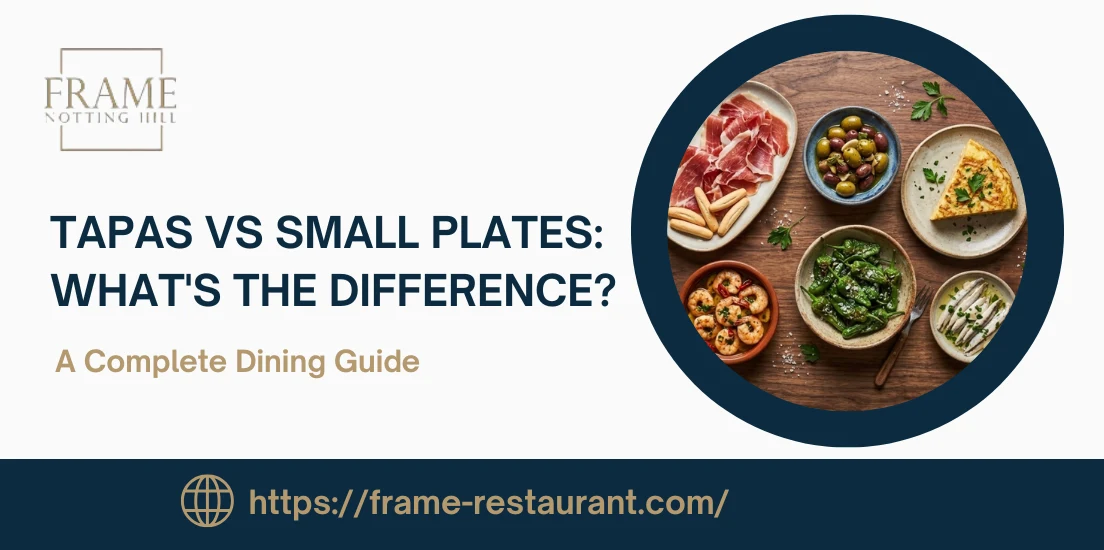
Tapas are small, shareable Spanish dishes rooted in a specific culinary tradition and social ritual. “Small plates” is a broader modern restaurant term used for bite-sized dishes of any cuisine. In short: all tapas are small plates, but not all small plates are tapas. The difference comes down to origin, ingredients, and the way the meal is meant to be eaten.At Frame Notting Hill, we get asked this question often enough that we thought it deserved a proper answer.

What Is Tapas?
Tapas is a style of Spanish dining built around small dishes meant for sharing, traditionally served alongside sherry or wine in bars across Spain. The word comes from tapar, meaning “to cover,” referring to the old custom of placing a slice of bread or ham over a wine glass to keep out flies and dust.Classic tapas include patatas bravas, gambas al ajillo (garlic prawns), croquetas, and jamón ibérico. These dishes follow specific regional recipes passed down for generations, and they’re built to be eaten slowly across several rounds, with conversation and wine as much a part of the meal as the food itself.Where Tapas Actually Come From
Tapas didn’t start as a trendy menu format. They started as a practical Spanish custom. The most commonly cited origin story is that Spanish innkeepers would place a small slice of bread or ham over a glass of wine or sherry to keep flies out. The word tapa literally means “lid” or “cover” in Spanish. Over time, that cover evolved into a small snack served alongside the drink, and the tradition grew into a full culinary culture across Spain, particularly in regions like Andalusia and the Basque Country.What Are Small Plates?
“Small plates” is a restaurant menu format, not a cuisine. It describes any dish served in a smaller portion than a standard main course, designed for sharing or sampling. The trend grew across Western restaurants from the 2000s onward as chefs borrowed the shareable, sociable format of tapas and applied it to other cuisines, including Italian, American cuisine, Middle Eastern, fusion and beyond.A small plates menu might include mini burgers, truffle fries, or spring rolls next to items with no connection to Spain at all. The format is flexible by design; the ingredients and techniques are not tied to any single tradition.Where “Small Plates” Comes From
It emerged as Western restaurants, particularly in the US and UK, began borrowing the shareable, varied format of tapas without necessarily serving Spanish food. A small plates menu might include Korean-style buns, Italian arancini and Mexican-inspired ceviche all on the same page, unified only by portion size and the idea that diners will order several dishes to share.In other words, “small plates” describes a menu structure, while “tapas” describes a cuisine and a culture. A restaurant can absolutely serve small plates without ever calling itself a tapas bar. That’s the root of most of the confusion.Tapas vs Small Plates: Key Differences
| Tapas | Small Plates | |
|---|---|---|
| Origin | Spain, specifically Andalusia | General restaurant trend, popularised globally in the 2000s–2010s |
| Cultural Root | Rooted in Spanish social dining and bar culture | A menu format, not tied to one culture or history |
| Typical Pairing | Sherry, vermouth, Spanish wine, or beer | Wine, cocktails, or whatever the restaurant’s concept calls for |
| Dish Examples | Patatas bravas, gambas al ajillo, jamón ibérico, croquetas | Sliders, dumplings, mini tacos, dips, or any cuisine’s bite-sized dish |
| Portion Philosophy | Designed from the start to be shared slowly over hours | Designed to let a menu offer variety and flexibility |
| Where You’ll Find It | Traditional tapas bars and Spanish restaurants | Gastropubs, fusion restaurants, wine bars, and tasting menus |
Is Tapas the Same Thing as Small Plates?
No. Tapas is a specific Spanish culinary tradition with its own history, ingredients, and dining etiquette. Small plates is a generic restaurant format that many cuisines have adopted because it works well for sharing. Every plate of tapas qualifies as a small plate, but a small plate of, say, Korean fried chicken bites is not tapas, because it doesn’t come from that Spanish tradition.Why Do People Mix Up Tapas and Small Plates?
Because tapas is one of the best-known small-plates traditions in the world, many restaurants now use “small plates” as a catch-all menu label, including for dishes that have nothing to do with Spain. Over time, the two terms have blurred in everyday conversation, even though they describe different things. One is a cuisine, while the other is a format.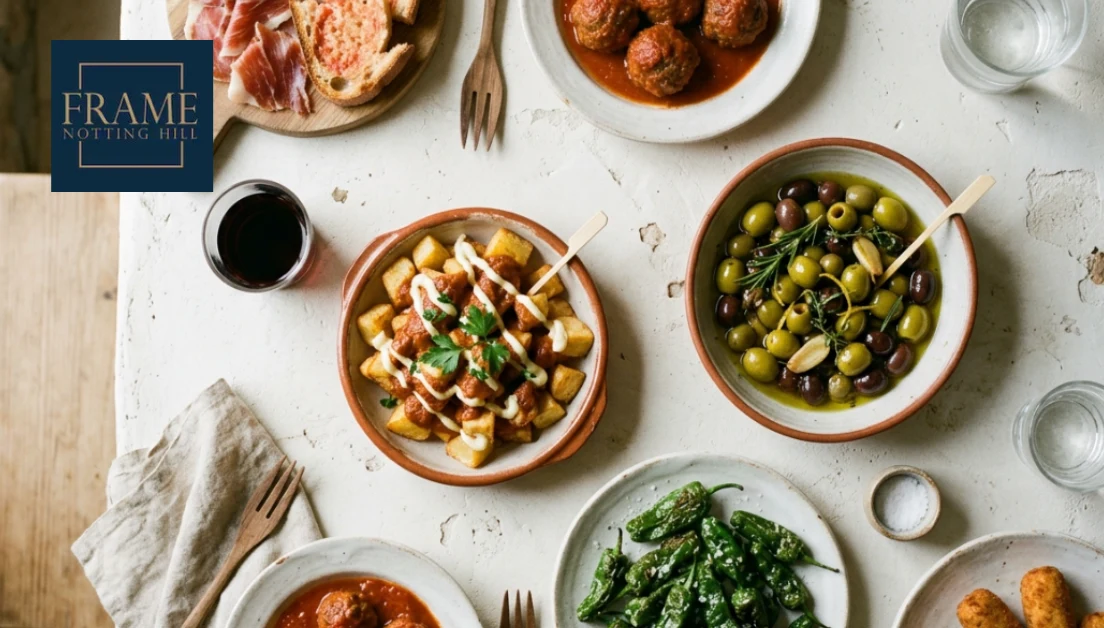
Taste the Difference at Frame, Notting Hill
At Frame Notting Hill, we serve authentic, Spanish-inspired tapas made with fresh, locally sourced ingredients. It’s the real tradition, not a small plates imitation of it. Our tapas menu is built for sharing and pairs naturally with our curated wine list of Spanish whites, reds and sherries.Planning a longer evening with friends or celebrating a special occasion? Our private dining spaces, including the Indoor Garden and The Cellar, are designed for the relaxed, shared style of dining that tapas is known for.
Book a Table at Frame Notting Hill