

What is Chimichurri Sauce?
Chimichurri is a traditional condiment made from finely chopped fresh herbs, garlic, vinegar, and oil. Its bright, tangy taste makes it a versatile accompaniment for grilled dishes, particularly beef, chicken, and fish. Unlike heavier sauces, chimichurri is fresh, herb-forward, and uncooked, which preserves the natural flavors of its ingredients.Key ingredients in chimichurri sauce typically include:- Fresh parsley
- Garlic cloves
- Red wine vinegar
- Olive oil
- Red pepper flakes
- Oregano
- Salt and pepper
How to Make Chimichurri Sauce: Step-by-Step
Method 1: By Hand (Traditional and Recommended)
Making chimichurri by hand produces the most authentic result, a sauce with visible texture, distinct flecks of herb and garlic, and a loose, spoonable consistency rather than a smooth purée.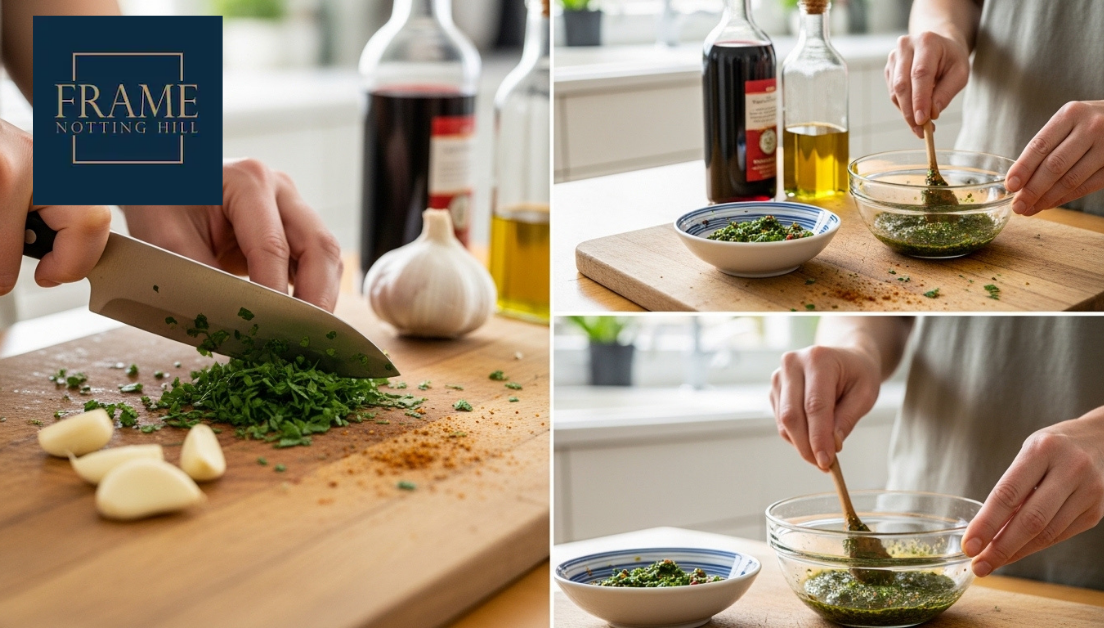 Step 1: Prepare the parsley: Wash the parsley thoroughly and pat dry. Remove the thickest stems, but do not discard all stems; the thinner ones have excellent flavour. Gather the parsley into a tight bundle and chop finely with a sharp knife. You want the pieces to be very fine but not reduced to a paste. Transfer to a medium mixing bowl.Step 2: Mince the garlic: Peel the garlic cloves and mince them as finely as possible. For an even smoother result, sprinkle a pinch of salt over the garlic as you chop. This acts as an abrasive and helps break it down into a near-paste. Add to the bowl with the parsley.Step 3: Add the dry aromatics: Add the dried oregano, chilli flakes, salt, and black pepper directly to the herb and garlic mixture. Stir to combine.Step 4: Add the acid: Pour in the red wine vinegar and stir well. Allow the mixture to sit for one to two minutes, and the acid will begin to soften the raw edge of the garlic and bring the flavours together.Step 5: Add the olive oil: Pour the extra virgin olive oil over the mixture gradually, stirring as you go. You are looking for a sauce that is loose and spoonable, with the oil binding the herbs rather than drowning them. Adjust the quantity to achieve your desired consistency.Step 6: Rest before serving: This step is crucial and often overlooked. Allow your chimichurri to rest at room temperature for at least 20 minutes before serving. This resting period allows the garlic to mellow, the vinegar to integrate, and the herbs to fully infuse the oil. For maximum flavour development, prepare it several hours in advance or even the night before.
Method 2: Using a Food Processor (Quicker Alternative)
If you are short on time, a food processor can be used but with caution. Over-processing will turn chimichurri into a smooth, homogenised paste, which loses much of its character.Step 1: Place the parsley, garlic, oregano, and chilli flakes into the food processor.Step 2: Pulse five to seven times in short bursts until everything is finely chopped but still has texture. Do not blitz continuously.Step 3: Transfer the chopped mixture to a bowl. Stir in the red wine vinegar, olive oil, salt, and pepper by hand. Finishing by hand gives you full control over the consistency.Step 4: Rest for at least 20 minutes before serving.Tips for the Perfect Chimichurri Sauce
- Fresh herbs are key: Use fresh parsley and oregano for the most authentic flavour.
- Adjust heat: Add more or less chilli flakes depending on your spice preference.
- Consistency: For a smoother sauce, pulse in a food processor lightly but avoid over-blending; chimichurri should have a slightly coarse texture.
- Make ahead: Chimichurri can be stored in an airtight container in the fridge for up to one week. Always bring it to room temperature before serving.
Serving Suggestions for Tapas
Chimichurri sauce is versatile and enhances any tapas spread:- This vibrant sauce has become a favourite worldwide, elevating grilled meats like ribeye steak and roasted vegetables alike
- Drizzle over grilled chicken skewers or lamb chops
- Toss with roasted vegetables like bell peppers and zucchini
- Serve as a dip with crusty bread or tapas boards
- Pair with seafood such as grilled prawns or calamari
- For a refined seafood pairing, chimichurri also works beautifully alongside tuna tartare, adding a herbal brightness that lifts the delicate raw fish
Why Chimichurri Sauce Works for Tapas
At our Restaurant, we love adding a fresh twist to traditional tapas. Chimichurri sauce is ideal because it complements a wide range of dishes without overpowering the other flavours. Its herbal, garlicky profile pairs beautifully with both meaty and vegetarian tapas, making it a versatile addition to any tapas menu.
Frame Notting Hill
Love Chimichurri? Try It at Frame.
From 28-day dry-aged ribeye with chimichurri to seasonal small plates made for sharing, discover bold flavours at Frame Notting Hill.