
Frame Notting Hill

Basque Cheesecake Recipe | Creamy, Burnt & Irresistible

Basque Cheesecake Recipe

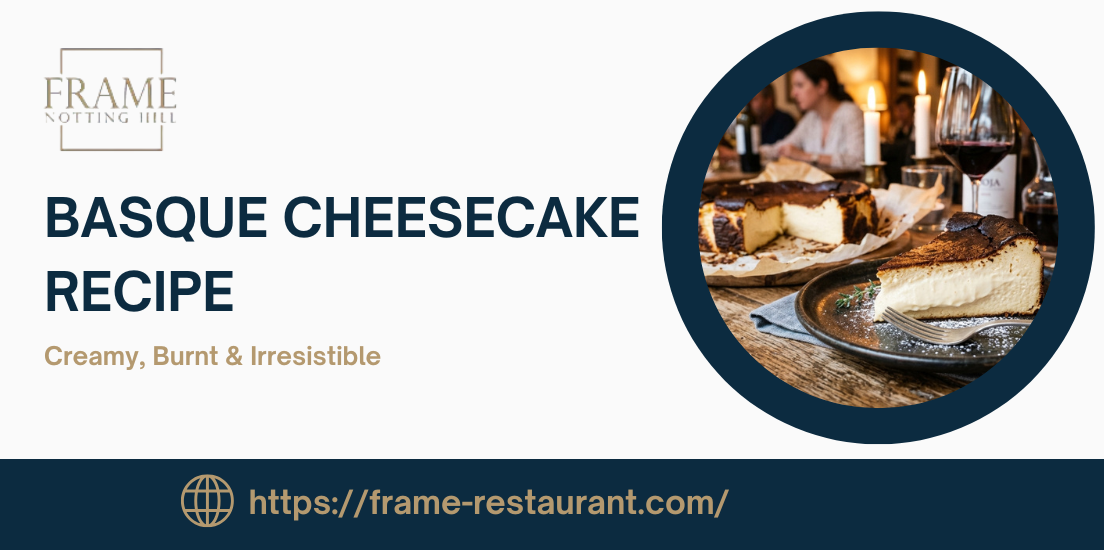
Imagine pulling a cheesecake out of the oven, its top dark, almost burnt, its centre still trembling like a gentle wave. You let it cool, slice through it, and discover the most luxuriously creamy, melt-in-your-mouth custard you have ever tasted. That is the magic of Basque cheesecake. At the best restaurant in London, this iconic Spanish dessert throws out every cheesecake rule ever written and replaces them with something far better: simplicity, confidence, and extraordinary flavour.

Here’s a complete, step-by-step guide on how to make Basque cheesecake at home, whether you’re hosting a dinner party in London or looking to recreate restaurant-quality flavours in your own kitchen. 

History of Basque Cheesecake: From San Sebastián to Every Corner of the World

Basque cheesecake carries a history as bold and beautiful as its signature burnt top. Born in the early 1990s in San Sebastián, a coastal city in the Basque Country of northern Spain, this extraordinary dessert was created by Chef Santiago Rivera at his beloved restaurant, La Viña. At a time when cheesecakes were treated with the utmost delicacy, Rivera took a completely different path, cranking the oven high, skipping the crust, and letting the top burn with confidence.

The result was something no one expected. A cheesecake that looked wild on the outside but tasted like pure silk on the inside. Locals fell in love immediately, and word travelled fast. Chefs from around the world began making pilgrimages to La Viña just to taste it, and soon after, they brought the recipe home.

Basque Cheesecake Ingredients

One of the best things about this Basque cheesecake recipe is how simple its ingredient list is. You only need a handful of everyday ingredients to create something truly spectacular.

  • Cream cheese  900g (full-fat, room temperature)
  • Granulated sugar  300g
  • Eggs  5 large, room temperature
  • Heavy cream  300ml
  • All-purpose flour  2 tablespoons
  • Vanilla extract  1 teaspoon
  • Salt  a small pinch

That is it. No gelatin, no water bath, no complicated techniques. The magic is all in the method.

ingredient notes:

Always use full-fat cream cheese for the best texture. Low-fat versions will make the cheesecake watery and flat. Make sure your cream cheese and eggs are at room temperature before you start this; it ensures a smooth, lump-free batter. The small amount of flour helps set the structure just enough without making it dense.

How to Make Basque Cheesecake

Making Basque cheesecake at home is surprisingly easy. Follow these steps carefully, and you will get perfect results every time.

Step 1: Prepare Your Pan

Preheat your oven to 220°C (425°F). Take a 9-inch (23cm) springform pan and line it with two layers of parchment paper. Let the paper hang over the edges generously. This is part of the classic Basque cheesecake look and also makes it easy to lift out. You do not need to grease the pan.

Step 2: Mix the Batter

In a large mixing bowl, beat the cream cheese and sugar together until completely smooth and fluffy, about 2 to 3 minutes. Add the eggs one at a time, mixing well after each addition. Pour in the heavy cream and vanilla extract, then mix until fully combined. Finally, sift in the flour and a pinch of salt, and gently fold everything together until the batter is silky smooth with no lumps. This is the secret to a creamy Basque cheesecake: patience in the mixing stage.

Step 3: Bake It

Pour the batter into your prepared pan. Now comes the most important part: how to bake a Basque cheesecake correctly. Bake at 220°C (425°F) for 50 to 60 minutes. The cheesecake should be deeply golden brown, almost dark on top, and when you gently shake the pan, the centre should still have a noticeable jiggle. That wobble is not a mistake; it is exactly what you want.

Step 4: Cool and Set

Remove the cheesecake from the oven and let it cool completely in the pan at room temperature. This usually takes about 2 hours. As it cools, the centre will settle and firm up into that beautiful creamy, custardy texture. Once cooled, refrigerate it for at least 4 hours or overnight for the best results.

Basque Cheesecake

Pro Tips for the Perfect Basque Cheesecake

  • Do not overbake it; if the centre looks completely set in the oven, it is already overbaked. You want that jiggle
  • Use room temperature ingredients; cold cream cheese causes lumps and uneven mixing
  • Do not skip the resting time. The cheesecake needs time to cool and set properly; cutting it too soon ruins the texture
  • Embrace the burn; the dark top is not a mistake. If it looks a little scary, it is probably perfect
  • High oven temperature is non-negotiable. This is what creates the burnt top and the creamy centre simultaneously
  • Line the pan generously with the overhanging parchment, which is both decorative and functional

How to Store Basque Cheesecake

In the Fridge

Once baked and cooled, your cheesecake should go straight into the refrigerator. How long does Basque cheesecake last in the fridge? When properly covered with plastic wrap or stored in an airtight container, it will stay fresh for up to 5 days. In fact, many people find it tastes even better on day two or three, as the flavours continue to develop and the texture becomes richer.

Always store it in the fridge, away from strong-smelling foods, as cream cheese can easily absorb odours.

In the Freezer

When it has a question, can you freeze Basque cheesecake? The answer is generic and simple: Absolutely, and it freezes surprisingly well. To freeze it, allow it to cool completely, then refrigerate. Once fully set, wrap individual slices (or the whole cheesecake) tightly in plastic wrap, then place in a freezer-safe bag or container. It can be frozen for up to 2 months without losing its flavour or texture.

To thaw, transfer it from the freezer to the refrigerator and let it defrost overnight. Avoid thawing at room temperature, as this can affect the creamy texture. Once thawed, consume within 2 days and do not refreeze.

Basque Cheesecake at Frame Restaurant, Notting Hill

At Frame Restaurant, Basque cheesecake is not just a dessert; it is the perfect ending to an unforgettable dining experience. Whether you are joining us for a relaxed evening of sharing tapas or a special-occasion dinner at the restaurant in Notting Hill, our dessert menu celebrates authentic flavours, and our creamy Basque cheesecake is the perfect sweet finish for a dining experience that transports you straight to the heart of San Sebastián.

Every cheesecake we serve is carefully crafted to deliver that signature combination of a deeply caramelised burnt top, a luxuriously creamy centre, and a finish that lingers long after the last bite. Served with a refreshing sorbet and a cinnamon nut crumble, it is rustic, elegant, and utterly irresistible all at once.

What to serve with Basque cheesecake 

Basque cheesecake is stunning on its own, but the right pairing makes it truly unforgettable. At our restaurant, here is what our guests love to enjoy alongside it:

  • Creamy Basque Cheesecake, Sorbet & Cinnamon Nut Crumble, our signature dessert, rich and velvety inside with a perfectly burnt top, balanced by a light sorbet and a warm, spiced crumble finish
  • Sautéed Prawns, Garlic Butter, a beautifully light and flavourful seafood course that sets the perfect tone before finishing with the richness of Basque cheesecake
  • Duck Breast, Smoked Aubergine Purée, Pomegranate Glaze, bold, smoky, and slightly sweet, a main that leads naturally and elegantly into our creamy cheesecake
  • Slow Cooked Oxtail, Parsnip & Leek Purée deep, hearty, and indulgent. The richness of this dish makes the creamy lightness of Basque cheesecake the ideal sweet contrast
  • Creamy Burrata, Tomato & Mint Paste, Basil Oil, Pomegranate, a fresh, vibrant starter that opens the palate beautifully for the depth of flavour to follow in our cheesecake
  • Brandy Dark Chocolate Fondant, Sorbet, Nut Crumble. If you cannot choose, order both desserts and share the Basque cheesecake and chocolate fondant together, as they are the ultimate Frame dessert experience
  • Strawberry Basil & Passion Fruit Sorbet  a light, refreshing palate cleanser that pairs wonderfully alongside a slice of our Basque cheesecake for a lighter finish to your meal.

Looking for the perfect drink to accompany your Basque cheesecake? A glass of sparkling wine makes a wonderfully elegant pairing. Making Basque cheesecake at home is a wonderfully rewarding experience, but tasting it the way our chefs prepare it at Frame Notting Hill is something else entirely. Every element, the temperature, the timing, the texture, is carefully controlled and crafted to deliver the most refined and memorable result possible.

Conclusion

Basque cheesecake is one of those rare recipes that looks impressive, tastes extraordinary, and is genuinely easy to make at home. From its humble origins in a small San Sebastián restaurant to becoming one of the most searched desserts in the world, it has earned every bit of its fame. Whether you are making it for a dinner party, a special occasion, or simply because you deserve something indulgent, this creamy Basque cheesecake recipe will not let you down.

If you’d like to experience it at its very best, our creamy Basque cheesecake at Frame Notting Hill is in a class of its own. Baked with care and served in the warm, intimate atmosphere of our restaurant, it’s an experience worth savouring.

Book your table today and experience Basque cheesecake done the right way, right here in Notting Hill.

FAQ's

Basque cheesecake is a crustless Spanish cheesecake baked at very high heat to create a burnt caramelised top and a soft, custardy centre. Regular cheesecake is baked slowly at a low temperature to avoid browning and cracking.

Bake it at 220°C (425°F) for 50 to 60 minutes. The top should be deeply browned, and the centre should still jiggle when shaken. Every oven is slightly different, so start checking at the 50-minute mark.

Sinking is completely normal and expected. As the cheesecake cools, the centre will naturally deflate, and that sunken, rustic look is slightly part of its charm and character.