

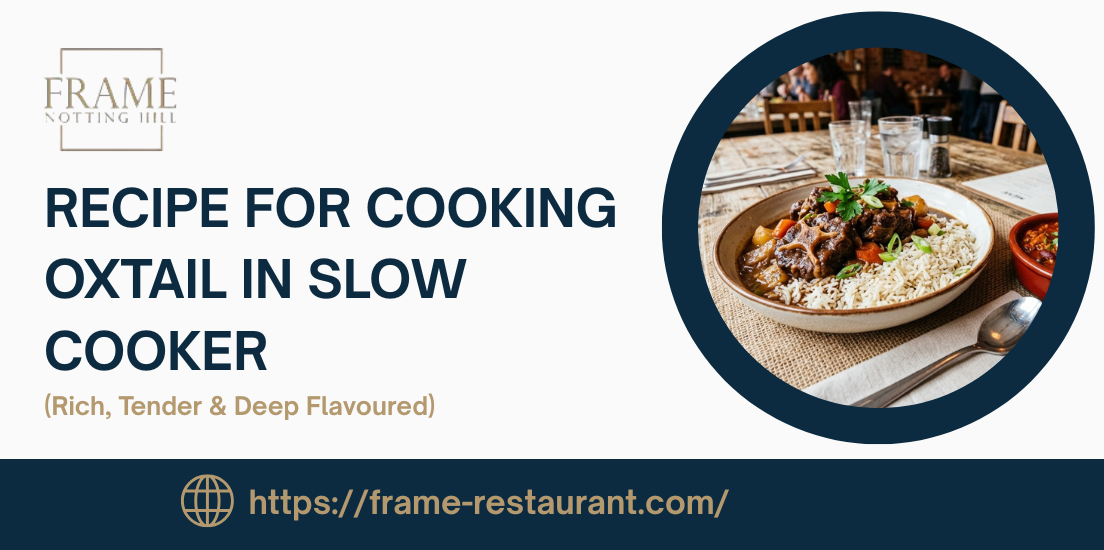
Oxtail is one of those ingredients that rewards patience. It is not a cut you rush. But when you give it the time it deserves, it transforms into something extraordinary: fall-off-the-bone tender meat wrapped in a thick, glossy, deeply flavoured gravy that tastes as if it came straight from a fine restaurant kitchen. The slow cooker is the best tool for this dish. It does the hard work for you while you get on with your day. no stirring every hour, no worrying about the pot drying out. Just set it, leave it, and come back to perfection.In this article, you will find the complete recipe for Cooking Oxtail in slow cooker, step-by-step instructions, professional tips, and everything you need to cook oxtail at home that is deeply flavoured, rich, and fork-tender. You will also discover where to try it in London, including standout destinations in Notting Hill.
What Is Oxtail?
Oxtail is exactly what it sounds like: the tail of a cow. It is cut into thick, cross-sectioned pieces, each containing a central bone surrounded by layers of meat, fat, and connective tissue. This unique structure is what makes oxtail so special as a cooking ingredient. Oxtail is beloved across many cuisines around the world. Every culture that has discovered oxtail has fallen in love with it for the same reason: it delivers an unmatched depth of flavour that no other cut of beef can quite replicate.From a nutritional standpoint, oxtail is also remarkably good for you. It is high in protein, rich in collagen (which supports joint and skin health), and contains generous amounts of iron, zinc, and B vitamins. The bone marrow within each piece adds further richness and nutrients to the dish as it cooks.Why cook Oxtail in a Slow Cooker?
Oxtail is a heavily worked muscle. The tail of a cow is in near-constant motion throughout the animal’s life, which means the muscle fibres are dense and the connective tissue is thick. The only way to break all of that down into something tender is through prolonged exposure to low, consistent heat, which is precisely what a slow cooker provides.When oxtail is cooked at low temperatures over many hours, several things happen simultaneously. The collagen in the connective tissue converts into gelatin, which thickens and enriches the cooking liquid. The fat slowly renders out, basting the meat from within. The spices and aromatics have time to fully penetrate the meat rather than just sitting on the surface. The result is a dish in which every element has merged into a harmonious whole.Ingredients You Will Need
For the Oxtail
- 2 kg (approximately 4.5 lbs) of oxtail pieces, cut into sections
- 2 teaspoons of salt
- 1 teaspoon of black pepper
- 1 teaspoon of smoked paprika
- 1 teaspoon of allspice (pimento)
- 1 teaspoon of garlic powder
- 2 tablespoons of Worcestershire sauce
- 2 tablespoons of soy sauce
- 2 tablespoons of browning sauce (optional, for colour and depth)
For the Aromatics and Vegetables:
- 1 large onion, roughly chopped
- 6 cloves of garlic, minced
- 2 stalks of celery, chopped
- 2 medium carrots, cut into chunks
- 1 scotch bonnet pepper or 1 teaspoon of red chilli flakes (adjust to heat preference)
- 2 tablespoons of tomato paste
- 1 can (400g) of crushed tomatoes
For the Liquid:
- 500 ml (2 cups) of good-quality beef stock
- 250 ml (1 cup) of red wine (or replace with extra beef stock if preferred)
- 2 tablespoons of Worcestershire sauce
Herbs and Spices:
- 3 sprigs of fresh thyme (or 1 teaspoon dried)
- 2 bay leaves
- 1 teaspoon of dried oregano
- Half a teaspoon of ground cinnamon
- Half a teaspoon of ground cumin
Optional Additions:
- 1 can of butter beans or broad beans, drained (add in the last 2 hours)
- 2 tablespoons of butter (for finishing the sauce)
- Fresh parsley or spring onions for garnish
What to Have Ready Before You Cook
- A slow cooker of at least 6 litres capacity (oxtail pieces are large and need space)
- A heavy-bottomed skillet or cast-iron pan for browning
- Tongs for turning the meat
- A wooden spoon or silicone spatula
- A large bowl for marinating
- A ladle for skimming fat and serving
- A small saucepan, if you choose to reduce the sauce separately at the end
How to Cook Oxtail Properly | Step-by-Step
Step 1: Marinate the Oxtail
The night before you plan to cook, combine the oxtail pieces with salt, black pepper, smoked paprika, allspice, garlic powder, Worcestershire sauce, soy sauce, and browning sauce in a large bowl. Mix everything thoroughly so every piece is well coated. Cover and refrigerate overnight or for at least 4 hours.This marinating step is not optional if you want deeply flavoured oxtail. The spices need time to penetrate the meat, and the salt begins a process that helps the meat retain moisture during the long cook. If you are short on time, even 2 hours of marinating will make a significant difference compared to none.Step 2: Brown the Oxtail ( Compulsory Step )
Remove the oxtail from the fridge about 30 minutes before cooking to bring it closer to room temperature. Heat 2 tablespoons of oil in a heavy-bottomed skillet over high heat until it is very hot and just beginning to smoke.Working in batches, never crowding the pan, sear the oxtail pieces for 3 to 4 minutes per side, until they develop a deep, dark brown crust. You are not trying to cook the meat through at this stage. You are building flavour through the Maillard reaction, a chemical process that occurs when proteins and sugars are exposed to high heat, creating hundreds of new flavour compounds. This crust is the foundation of your dish’s flavour. Set the browned oxtail aside and do not clean the pan. Those dark, sticky bits left behind are pure flavour.Step 3: Sauté the Aromatics
In the same pan, reduce the heat to medium and add a little more oil if needed. Add the chopped onion and cook for 3 to 4 minutes until softened and beginning to turn golden. Add the minced garlic and scotch bonnet and cook for another minute until fragrant. Stir in the tomato paste and cook it for 2 minutes, stirring constantly. Cooking the tomato paste directly in the oil deepens its flavour and removes any raw, acidic taste.Step 4: Deglaze the Pan
Pour the red wine into the hot pan and scrape up every last bit of browned bits from the bottom with a wooden spoon. This process, called deglazing, dissolves all of those caramelised flavour compounds into the liquid. What you are pouring into your slow cooker at this stage is not just wine; it is concentrated, layered flavour. Let it bubble for 2 minutes to cook off the raw alcohol before removing from the heat.Step 5: Assemble in the Slow Cooker
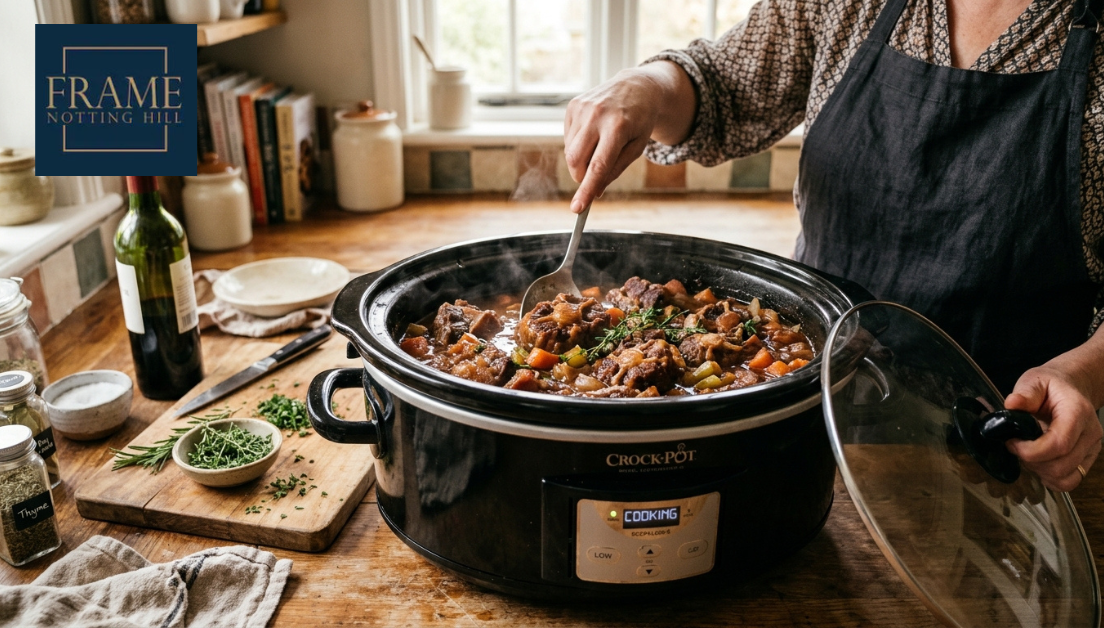
Place the chopped carrots and celery at the bottom of the slow cooker. These act as a natural rack, keeping the oxtail slightly elevated and allowing liquid to circulate beneath. Place the browned oxtail pieces on top. Pour the sautéed onion and garlic mixture over the meat, followed by the crushed tomatoes, beef stock, and the deglazed wine from the pan. Tuck in the thyme sprigs and bay leaves. Add the oregano, cinnamon, and cumin.The liquid should come roughly two-thirds of the way up the oxtail pieces. Oxtail releases a lot of moisture as it cooks, so you do not need to fully submerge it.Step 6: Cook Low and Slow
Place the lid on the slow cooker and set it to LOW for 8 to 10 hours, or HIGH for 5 to 6 hours. The LOW setting is strongly recommended. The extra time produces noticeably more tender meat and a more developed, complex flavour. Do not lift the lid during cooking. Every time the lid is removed, the slow cooker loses heat and moisture, and it can take up to 30 minutes to recover. Trust the process. If you are adding butter beans or broad beans, add them in the last 1.5 to 2 hours of cooking time. Adding them at the beginning will make them too soft and mushy.The oxtail is ready when the meat is completely tender, pulls away from the bone with minimal effort, and the gravy is thick and deeply coloured.Step 7: Finish the Sauce
Once the oxtail is cooked, carefully remove the pieces from the slow cooker and set them aside. Use a ladle or large spoon to skim any excess fat from the surface of the cooking liquid. Remove and discard the bay leaves and thyme sprigs.If the gravy is thinner than you would like, pour it into a saucepan and simmer it over medium-high heat for 10 to 15 minutes until it reduces to a thick, glossy consistency. Stir in a tablespoon or two of cold butter at the very end; this technique, called mounting, gives the sauce a beautiful sheen and a velvety texture.Return the oxtail to the sauce, taste for seasoning, and adjust with salt and black pepper as needed. “`htmlPrefer to Leave the Slow Cooking to Us?
Oxtail takes time, patience and careful preparation to get right. If you would rather enjoy a beautifully slow-cooked dish than spend the day preparing one, join us at Frame Notting Hill.
Tips for the Best Slow Cooked Oxtail
- Always brown the meat. No searing means no deep flavour; this step cannot be skipped.
- Marinate overnight. A longer marinade means a richer, more flavourful result.
- Keep the lid on. Every time you lift it, you lose heat and moisture. Leave it alone.
- Use quality stock. Good stock makes good gravy. Simple as that.
- Add delicate vegetables late. Butter beans and green beans go in only during the last 2 hours.
- Cook until truly tender. If it still feels tough, it needs more time. Do not rush it.
How is oxtail served?
Simplicity is key when serving slow-cooked oxtail, with a focus on enhancing rather than overpowering its naturally rich, deep flavour. The dish is valued for its tender, fall-off-the-bone texture and glossy gravy, so accompaniments are chosen to complement and balance rather than compete with the main event.At Frame Notting Hill, a well-known tapas restaurant in Notting Hill, we bring the finest tapas cuisine to every dish we serve.Common serving styles include:- White rice or rice and peas
- Silky parsnip and leek purée
- Creamy buttered mashed potatoes
- Crusty sourdough or freshly made dumplings
- Steamed cabbage or fried sweet plantains
- Chimichurri sauce for a vibrant, herby contrast to the rich gravy
- Roasted root vegetables
- Garnished with fresh thyme and a drizzle of olive oil