

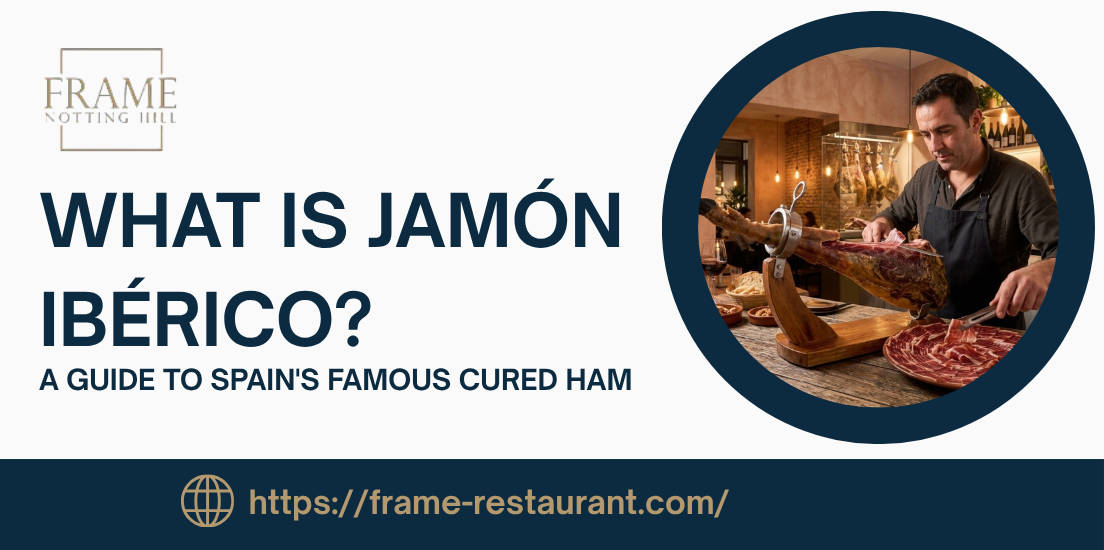
If you have ever walked into a Spanish tapas restaurant and seen a whole leg of ham resting on a stand behind the bar, you have met Jamón Ibérico. Thin, glossy slices that melt on the tongue, a deep savoury flavour with a hint of sweetness: it is one of the most celebrated foods in Spain, and one of the most misunderstood outside it.
In this guide, you will learn what is Jamón Ibérico, where it comes from, how it differs from Serrano ham, what the colour labels mean, and how to serve it properly. You will also find out where to enjoy Spanish tapas in Notting Hill, London.
What Is Jamón Ibérico?
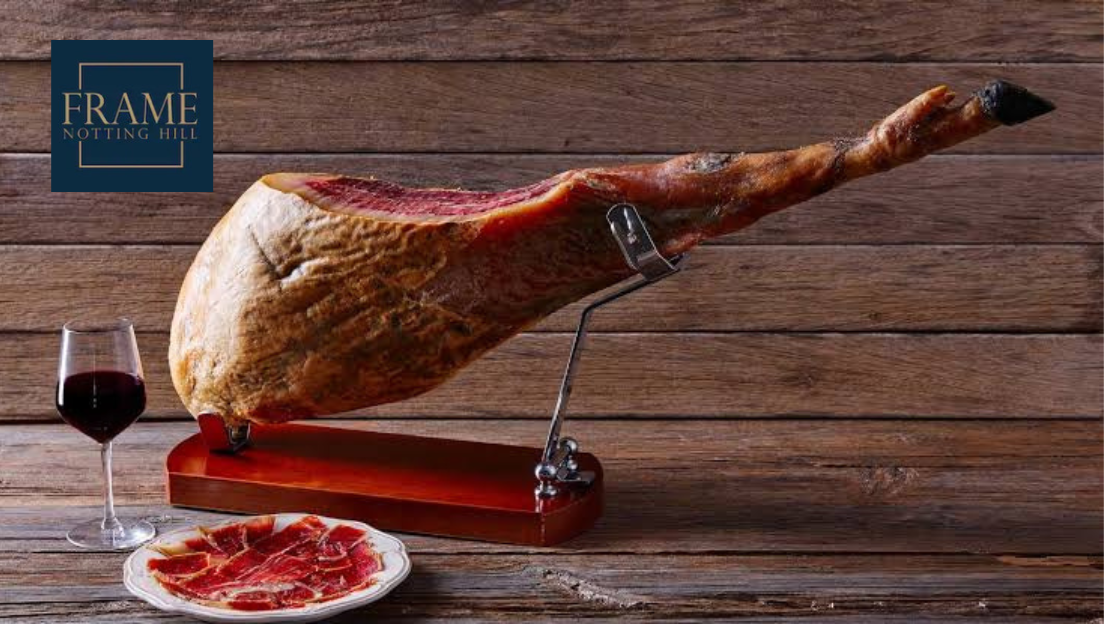
Jamón Ibérico is a dry-cured ham made from the hind leg of the Iberian pig, a native breed raised across Spain and Portugal. The meat is salted, rested and then aged slowly for anywhere between one and four years, depending on the quality grade.
The result is a ham with a deep ruby colour, fine white streaks of fat and an aroma that is rich, nutty and slightly sweet. The best examples are so tender that the fat begins to melt as soon as a slice touches your tongue. In Spain, it is treated less like a cold cut and more like a fine wine: something to be savoured slowly and shared.
Where Does Jamón Ibérico Come From?
Jamón Ibérico comes from the south-west of Spain, mainly the regions of Extremadura, Andalusia and Salamanca. Some of the best known protected areas include Jabugo in Huelva, Guijuelo in Salamanca, Los Pedroches in Córdoba and Dehesa de Extremadura. Each one has its own character, shaped by climate, land and tradition.
The Iberian pig is slow growing and has a natural ability to store fat within its muscle. This is called intramuscular fat, and it creates the fine marbling that makes Iberian ham so tender and flavourful. This trait is what separates it from ham made from standard commercial pig breeds.
Why Is Jamón Ibérico So Special?
Several things come together to make this ham exceptional:
- The breed: Iberian pigs are naturally prone to marbling, which gives the meat its silky texture.
- The diet: The finest hams come from pigs that feed on acorns during the autumn and winter.
- The time: Curing takes place slowly and naturally, often for three years or more.
- The craft: Master curers monitor every stage, from salting to ageing in cool mountain cellars.
Because each stage cannot be rushed, production is limited. That is why top-grade Jamón Ibérico is considered a delicacy and priced accordingly.
The Dehesa: The Secret Behind the Flavour
The real magic happens in the dehesa, Spain’s ancient oak woodland. Here, Iberian pigs roam freely during a season called the montanera, feeding on:
- Acorns (bellota)
- Natural grasses and herbs
- Roots and wild plants
This acorn-rich diet is high in oleic acid, the same healthy monounsaturated fat found in olive oil. It gives the fat a softer texture, a more aromatic quality and a delicate nutty flavour that you simply cannot replicate with conventional feed.
Understanding the Labels: Black, Red, Green and White
Spain uses a colour-coded label system to show the quality of Iberian ham. Knowing it makes buying and ordering far easier.
| Label | Grade | Diet | Flavour |
| Black | 100% Ibérico de Bellota | Free range, acorns and grass | Deepest, nuttiest, most complex |
| Red | Ibérico de Bellota (50% or 75% Iberian) | Free range, acorns and grass | Rich, aromatic, slightly less intense |
| Green | Ibérico de Cebo de Campo | Free range, grass and feed | Balanced, milder, lightly sweet |
| White | Ibérico de Cebo | Farm raised, feed | Mild, tender, more affordable |
For a first taste, a Bellota ham is well worth trying. Once you have, it is easy to see why it has such a loyal following.
Jamón Ibérico vs Jamón Serrano: What’s the Difference?
Both are cured hams, and both are Spanish classics. They are quite different, though.
| Feature | Jamón Ibérico | Jamón Serrano |
| Breed | Iberian pig | White pig breeds |
| Curing time | 1 to 4 years | 9 to 24 months |
| Fat | Heavily marbled, melts easily | Leaner, firmer |
| Flavour | Rich, nutty, complex | Mild, savoury, salty |
| Price | Premium | Everyday |
In short: Serrano is the dependable everyday ham. Ibérico is the special occasion ham, prized for its marbling, depth and long finish.
Jamón vs Paleta: Which Leg Is Which?
You may also see the word paleta on a menu. Jamón comes from the hind leg and is larger, with a sweeter and more delicate flavour. Paleta comes from the front leg and is smaller, with a slightly more intense and savoury taste. Both are excellent, and paleta is often a little more affordable.
Ham is only one chapter of the Iberian story. To taste the same acorn-fed richness fresh off the grill, read what Pluma Ibérica is and why it is so prized.
How Is Jamón Ibérico Made?
The process is simple on paper, yet it takes patience and skill. Nothing is added except salt, time and the right conditions, which is what gives the ham such a pure, natural taste.
Step 1: Salting
The leg is covered in sea salt for a number of days, depending on its weight. The salt draws out moisture and starts the preservation process, while also seasoning the meat evenly. This stage sets the foundation for the final flavour.
Step 2: Washing and Resting
Once salting is complete, the excess salt is washed off, and the ham is left to rest. During this time, the salt spreads gradually through the meat, creating a balanced taste from the surface to the centre.
Step 3: Drying
The hams are then hung in cool, airy drying rooms. Here, the first stage of curing begins as the meat slowly loses moisture and starts to develop its distinctive aroma. The conditions must be carefully monitored, as temperature and airflow play a key role in the quality of the ham.
Step 4: Ageing
Finally, the hams move to natural cellars to mature for months or even years. During this time, the fat slowly infuses the meat with flavour and aroma, creating the nutty, deeply savoury character that Jamón Ibérico is famous for. The longer the ageing, the more complex and refined the flavour becomes.
How to Serve Jamón Ibérico
Serving makes a real difference to how good Jamón Ibérico tastes.
- Serve at room temperature. Take it out of the fridge about 20 to 30 minutes before eating so the fat softens and the aroma opens up.
- Slice it very thin. Traditionally, ham is carved by hand with a long, flexible knife, giving slices so fine they are almost translucent.
- Cut across the muscle. This keeps the texture soft and the flavour balanced.
- Keep it simple. Good ham needs very little else.
Common ways to enjoy it:
- On its own, as a classic tapa
- With crusty bread and ripe tomato (pan con tomate)
- With Manchego cheese
- Alongside marcona almonds and olives
- With fresh figs or melon in summer
What to Drink with Jamón Ibérico
The right drink lifts the ham and balances its richness. Dry sherry styles such as Fino and Manzanilla are the classic match, their crisp, saline edge cutting through the fat beautifully. Sparkling Cava also works well, as its bubbles refresh the palate between slices. For red wine lovers, a young Rioja or a light Tempranillo adds fruit without overpowering the ham.
How to Store Jamón Ibérico
If you buy a whole leg or a vacuum-packed portion, a few simple habits will keep it at its best:
- Store whole legs in a cool, dry place, away from direct sunlight.
- Once cut, cover the exposed surface with a slice of its own fat or a clean cloth to stop it drying out.
- Keep pre-sliced packs in the fridge, and bring them to room temperature before serving.
- Eat sliced ham within a few days for the best flavour.
Is Jamón Ibérico Healthy?
Enjoyed in moderation, Jamón Ibérico has some notable qualities. Acorn-fed hams are high in oleic acid, a monounsaturated fat linked to heart health. The ham also provides high quality protein and nutrients such as B vitamins, zinc and iron. Like all cured meats, it is naturally salty, so it is best enjoyed in small, well-savoured portions rather than large servings.
Enjoy Spanish Flavours in Notting Hill
Spain’s cured ham tradition is at its best when it is shared, with small plates, good wine and good company. That spirit is exactly what you will find at Frame Restaurant in Notting Hill, London
As one of the best Spanish tapas restaurant Frame Notting Hill builds its menu around bold Iberian flavours and carefully sourced ingredients. From refined starters to premium mains, every dish is crafted with care, and the wine list is chosen to match. Whether you are planning a relaxed evening with friends or a special occasion, it is a welcoming place to experience Spanish dining at a high standard.
Taste seasonal tapas at Frame
Discover our tapas, wines and Iberian-inspired dishes at our Notting Hill restaurant.
Conclusion
Jamón Ibérico is far more than a slice of cured ham. It reflects centuries of Spanish tradition, from the oak forests of the dehesa to the patient craft of the curing cellars. Its marbling, aroma and melt-in-the-mouth texture set it apart from any ordinary ham, and its rarity keeps it among the most treasured foods in Spain.
The best way to understand it is to taste it: thinly sliced, served at room temperature and shared with good company.