

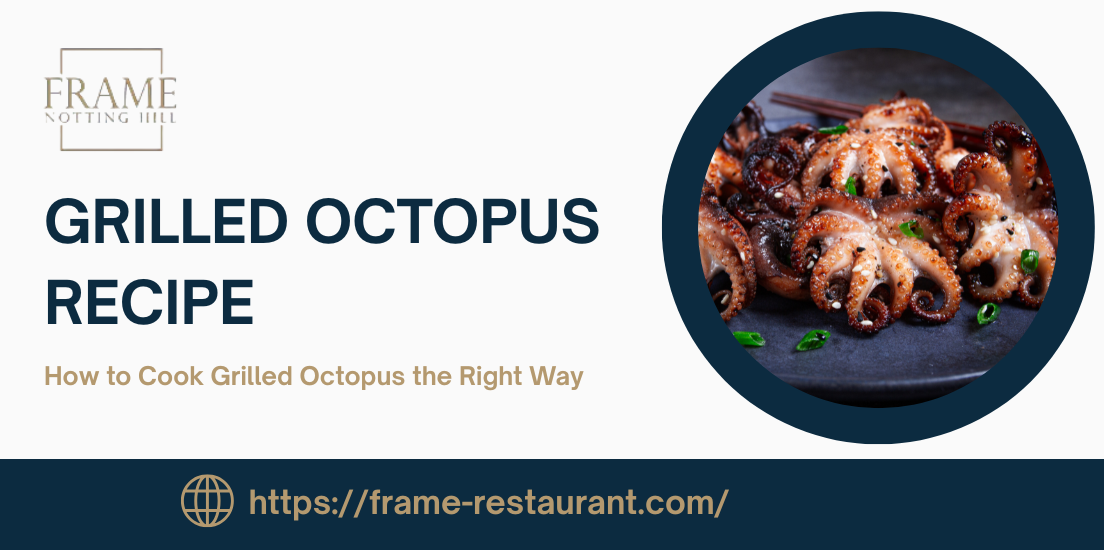
At Frame Notting Hill, our tapas menu is built on bold Mediterranean flavours, and few dishes capture that spirit as completely as our grilled octopus. Tender on the inside, smoky and charred on the outside, with a squeeze of lemon and a drizzle of good olive oil: it is a dish that looks impressive, tastes extraordinary, and, once you know the secret, is far more approachable than most people think.We get asked about it constantly. Guests dining with us at our Notting Hill restaurant want to know: how do you get it so tender? What gives it that gorgeous char? Can I actually recreate a grilled octopus recipe at home? The answer to the last question is a resounding yes, and this guide shows you exactly how.

What Is Grilled Octopus and Why Is It a Tapas Essential?
Grilled octopus or pulpo a la plancha in Spanish is a cornerstone of Mediterranean and Iberian cooking. Along the coasts of Galicia, the Basque Country, Portugal, and Greece, octopus has been eaten for centuries: braised with paprika, grilled over open fires, sliced and served over potatoes. In tapas culture, it represents everything the format does best: a dish that rewards technique, tastes extraordinary, and is meant to be shared.At Frame in Notting Hill, we put our own stamp on the tradition. Our version serves grilled octopus over silky celeriac puree, earthy, buttery, and rich with a vibrant mojo verde, the herb-forward green sauce from the Canary Islands. It is a combination that balances smoke, richness, and brightness in every mouthful.How Is Octopus Cooked? The Secret to Tender Octopus
The single most important thing to understand about cooking octopus professionally is this: the grill is the finish, not the start. The most common mistake home cooks make is throwing raw octopus directly onto a hot grill. The result is rubbery, chewy, disappointing and entirely avoidable.The real work happens in a long, gentle simmer before the octopus ever meets the heat of a grill. This process breaks down the tough collagen and muscle fibres, transforming the texture from dense and rubbery to yielding and almost silky. Once that foundation is built, a few minutes of intense, direct heat deliver the caramelisation, char, and smokiness that make the dish.How Long to Boil Octopus Before Grilling
This is one of the most searched questions around this dish, and the answer depends on size:- Small octopus (under 800g): 35–45 minutes at a steady simmer
- Medium octopus (800g–1.2kg): 45–55 minutes
- Large octopus (1.2kg–1.8kg): 55–70 minutes
Can You Grill Octopus Without Boiling?
Technically, yes, but we would advise against it unless you are using a dedicated slow-cooking method first. Raw octopus, when grilled directly, will be tough and chewy. Some chefs use a sous vide method at 77°C for 4–5 hours instead of boiling, which gives extraordinary control over texture; others slow-braise in the oven with olive oil and white wine. But for the home cook, boiling with aromatics before grilling is the most reliable and accessible method and it is what this recipe uses.Ingredients for Grilled Octopus
For the octopus and simmer:- 1 whole octopus (1.2–1.5 kg), cleaned: ask your fishmonger to prepare it
- 2 bay leaves
- 1 white onion, halved
- 1 tsp black peppercorns
- 3 cloves garlic, bruised
- A generous splash of dry white wine
- Cold water to cover
- 4 tbsp extra virgin olive oil: use the best you have
- 1 tsp smoked paprika (pimentón de la Vera)
- Juice of 1 lemon
- 2 cloves garlic, finely minced
- Flaky sea salt and freshly cracked black pepper
How to Cook Grilled Octopus: Step-by-Step Method
Step 1: Simmer the Octopus
Fill a large pot with enough cold water to fully submerge the octopus. Add the bay leaves, onion, bruised garlic, peppercorns, and white wine. Bring to a rolling boil. Once boiling, lower the octopus into the water headfirst, and the tentacles will curl immediately as the proteins react to the heat. This is exactly what you want. Reduce to a steady simmer and cook for 45–60 minutes, checking tenderness with a skewer from 40 minutes. Remove and allow to cool in the liquid for 15 minutes, then lift out. Do not discard the cooking liquor, it makes an exceptional base for seafood bisque or risotto.Step 2: Make the Celeriac Puree
While the octopus simmers, cook the diced celeriac in a pan of salted boiling water for 15–20 minutes until completely tender. Drain well and allow to steam dry for 2 minutes (this removes excess water and ensures a silkier puree). Transfer to a blender with the butter and cream. Blend until completely smooth, at Frame we pass ours through a fine sieve for an ultra-silky result. Season generously with salt, white pepper, and nutmeg. Keep warm.Step 3: Make the Mojo Verde
Blend the parsley, coriander, garlic, cumin, olive oil, vinegar, and chilli in a small blender or food processor until you have a vibrant, spoonable green sauce. Season to taste with salt. Mojo verde should be bright, herby, slightly sharp, and lightly spiced. It will keep in the fridge for 3 days, make extra.Step 4: Prepare the Paprika Dressing and the Octopus for Grilling
Whisk together the olive oil, smoked paprika, lemon juice, and minced garlic. Season with salt and pepper. Separate the cooled octopus tentacles from the head. Brush generously with the paprika dressing. Allow to sit at room temperature for 10 minutes while you bring your grill or cast iron griddle pan to the highest heat possible. Intense, direct heat is non-negotiable for a proper grilling octopus recipe.Step 5: Grill
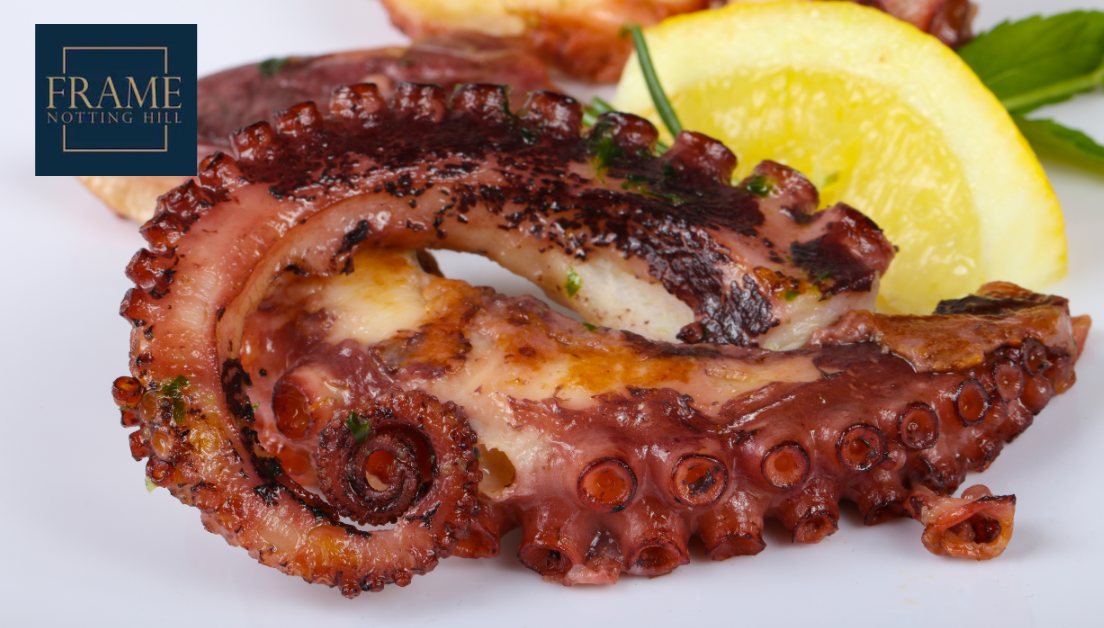
Place the tentacles on the grill in a single layer, leaving space between each one. Do not move them. Cook for 2–3 minutes undisturbed to develop a proper char and caramelised crust. Flip once and repeat. Total grill time: 5–6 minutes maximum. You are finishing and colouring, not cooking through. The outside should be lightly blistered and charred; the inside warm and yielding.Step 6: Plate and Serve
Spoon a generous pool of celeriac puree onto each warm plate. Lay 2–3 grilled tentacles over the puree. Drizzle with mojo verde and the remaining paprika dressing. Finish with a pinch of flaky salt and a lemon wedge on the side. Serve immediately, grilled octopus waits for no one.For an alternative finishing sauce, a drizzle of piquillo sauce adds a smoky, sweet depth that pairs beautifully with grilled octopus, while a rich garlic butter sauce offers a bolder, more indulgent finish for those who prefer a classic pairing.
Chef’s Tips for the Perfect Grilling Octopus Recipe
- Buy frozen, then thaw. Frozen octopus often outperforms fresh at home. The freeze-thaw cycle begins breaking down muscle fibres before cooking even starts, giving you a significant head start on tenderness.
- Never skip the aromatics in the simmering water. Bay leaves, peppercorns, garlic, and onion quietly build a background flavour that carries through to the finished dish.
- Dry the octopus before grilling. Pat the tentacles dry after brushing with the dressing. Moisture is the enemy of char; a dry surface caramelises; a wet one steams.
- Rest before grilling. Cooling the cooked octopus (even briefly) allows the exterior to firm up slightly, which means a better sear and less sticking on the grill.
- A cast-iron griddle pan is ideal. If you do not have an outdoor grill, a cast-iron pan on maximum heat delivers excellent results. Avoid non-stick, as it cannot withstand the required temperature.
- Do not overcrowd the grill. Give each tentacle space. Crowding drops surface temperature and causes steaming rather than charring, the exact opposite of what you want.
- Make extra mojo verde. It works brilliantly as a dressing for grilled vegetables, brushed over fish, or spooned over eggs the next morning. If you enjoy herb-based sauces like this, our chimichurri sauce is another versatile recipe worth trying