

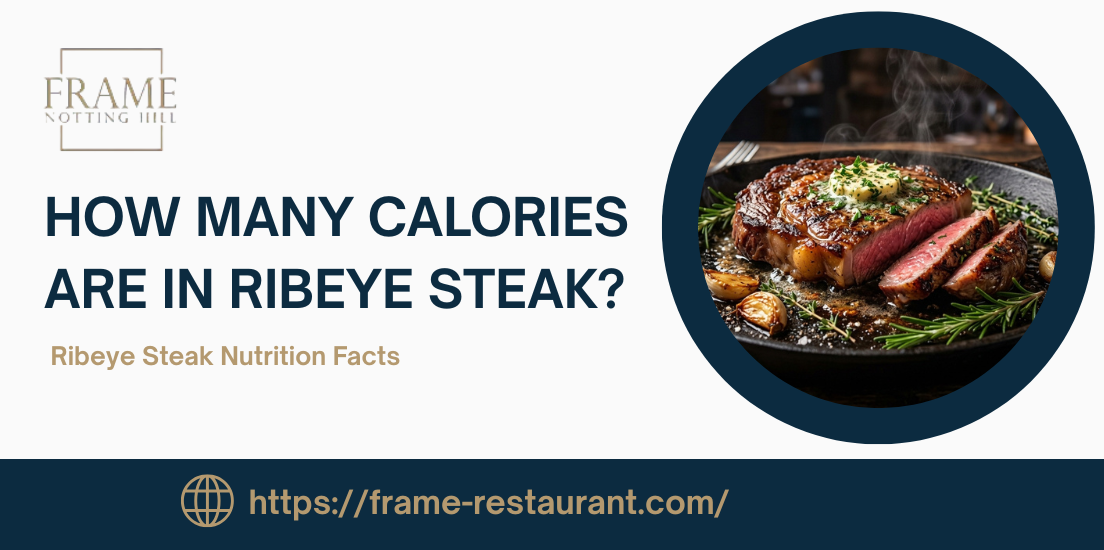
Ribeye steak is one of the most celebrated cuts in the world of meat, and for good reason. Taken from the rib section beneath the front of the backbone, it’s known for its exceptional tenderness, deeply savoury flavour, and generous marbling, making it a staple at the best restaurants in London. At Frame Notting Hill, our 28-day dry-aged ribeye served with chimichurri sauce is one of our most-loved dishes.
Whether you’re conscious of ribeye steak calories or simply curious about nutrition in a ribeye steak, it offers far more than indulgence. It’s a source of high-quality protein, key minerals, and essential B vitamins. Enjoyed in mindful portions, it fits comfortably into a nutritious diet.
Calories in Ribeye Steak
Understanding how many calories are in ribeye steak is key to managing your diet. The number of calories in a ribeye steak depends on several factors: the size of the cut, its fat content, and how it’s prepared. Cooking methods, from grilling over an open flame to pan-searing with butter, can meaningfully affect the final count. Here’s a practical breakdown by portion size:
Portion Size | Calories (Raw) | Calories (Grilled) | Protein | Fat |
3 oz (85 g) | 199 kcal | 247 kcal | 23.8 g | 10.8 g |
4 oz (113 g) | 265 kcal | 330 kcal | 31.7 g | 14.4 g |
6 oz (170 g) | 398 kcal | 495 kcal | 47.7 g | 21.6 g |
8 oz (227 g) | 530 kcal | 660 kcal | 63.7 g | 28.8 g |
12 oz (340 g) | 795 kcal | 990 kcal | 95.5 g | 43.2 g |
Note: Cooking with oils, butter, or marinades increases calorie and fat content. Grilling with no added fat is the leanest option. To get the most out of your cut, see our guide on how to cook ribeye steak for the best techniques.
Nutritional Value of a Ribeye Steak
Carbohydrates
Ribeye steak contains no carbohydrates, starch, fibre, or sugar, making it naturally carb-free and compatible with a wide range of dietary approaches.
Fats
A standard 3 oz serving contains approximately: Total Fat 10.8 g, Saturated Fat 4.2 g, Monounsaturated Fat 4.4 g, and Polyunsaturated Fat 0.4 g. The high proportion of monounsaturated fat, the same type found in olive oil, is worth noting. It’s one of the reasons ribeye, enjoyed sensibly, isn’t as nutritionally one-dimensional as often assumed.
Protein
With 23.8 g of protein per 3 oz serving, ribeye delivers a significant amount of complete, high-quality protein supporting muscle repair, healthy metabolism, and lasting satiety.
Vitamins and Minerals
When it comes to ribeye nutrition, it goes far beyond just protein and fat. A single serving provides zinc, selenium, niacin, vitamins B6 and B12, and iron, making it a genuinely nutrient-dense food.
Tips for Enjoying Ribeye Without Overdoing Calories
- Stick to 3–6 oz portions per meal
- Trim visible fat before cooking at home
- Pair with a fresh salad or light tapas sides
- Grill or roast instead of frying
- Avoid heavy oils and butter during cooking
- Let the chimichurri do the flavour work, not extra fat
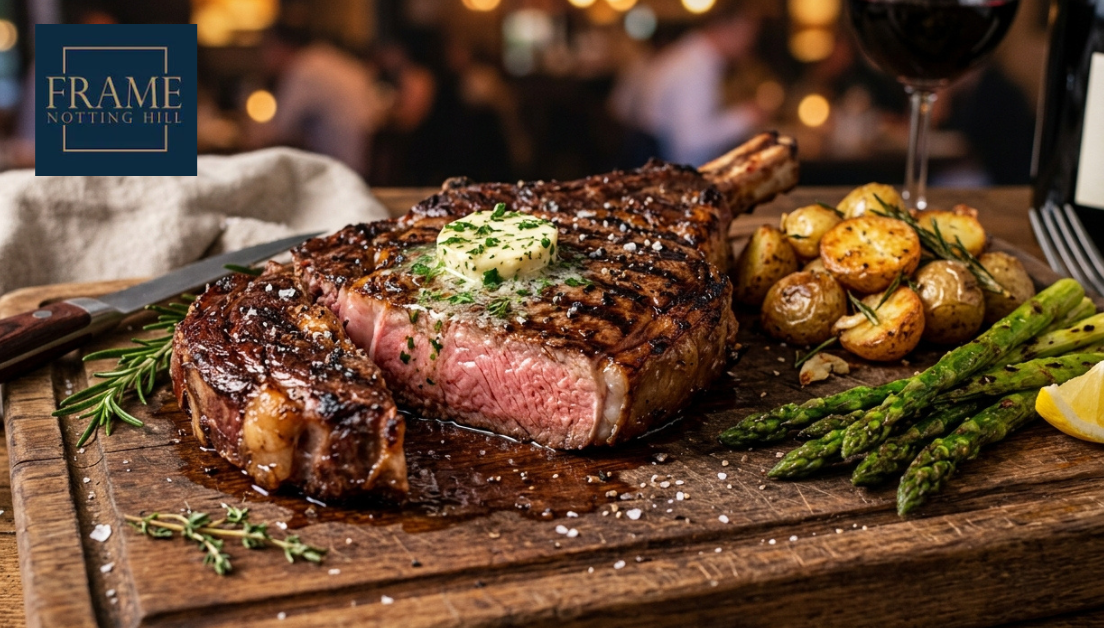
At Frame Notting Hill, our ribeye is served with chimichurri, a vibrant herb sauce that adds brightness and depth without adding unnecessary calories. It’s the kind of thoughtful pairing that makes a great steak even better.
Conclusion
Ribeye steak is one of the most flavour-forward, nutrient-rich cuts available. While it’s higher in calories than leaner alternatives, a natural consequence of its beautiful marbling, it delivers impressive amounts of protein, iron, zinc, and essential B vitamins in every serving.
With the right portion size, a considered cooking method, and complementary sides, ribeye fits naturally into a well-rounded approach to eating. If you’d like to experience it at its best, our ribeye with chimichurri at Frame Notting Hill is a cut above. Cooked with care and served in the warm, convivial atmosphere of our restaurant in Notting Hill, it’s an experience worth savouring.