

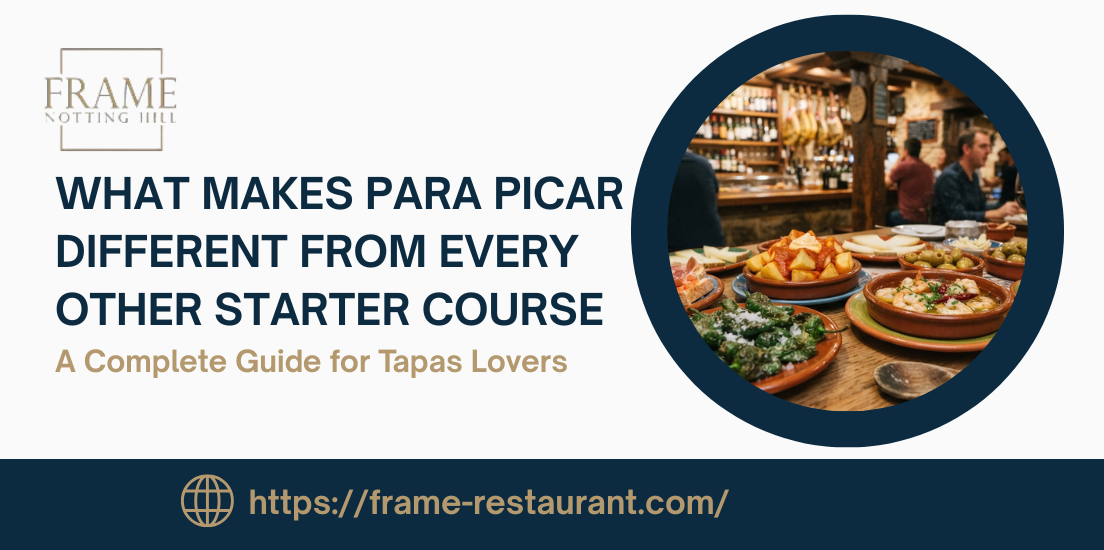
Walk into most restaurants, and the starter course follows a familiar script: one plate, one person, one flavour, then on to the main. Order para picar in a Spanish restaurant, though, and the whole rhythm changes. Dishes arrive to be shared, picked at, and passed around the table, and that difference is exactly what makes para picar such a distinct part of Spanish dining culture.
Para picar stands apart because it isn’t built around individual courses at all. It’s a way of eating where several small dishes arrive together, meant to be shared and savoured slowly rather than served one at a time.
In this guide, we’ll break down What Makes Para Picar Different from Other Starter Course, the classic dishes that define it, and how to order it correctly when you’re dining out.
What Does Para Picar Actually Mean?
Meaning of Para picar: “to pick at” or “to nibble on.” But the phrase carries more than a literal meaning. It describes an entire approach to eating. Rather than working through a menu in a strict starter-main-dessert sequence, para picar dishes are ordered together and enjoyed at the same time, straight from the centre of the table.
It’s worth noting that para picar isn’t just another word for tapas. Tapas is the broader term for small Spanish plates in general, while para picar refers specifically to the sharing philosophy behind them. It’s the idea that food is meant to be picked at slowly, in company, rather than served as an individual course.
If you’d like to explore this concept in more depth, our guide on Para Picar breaks down its origins and meaning in full.
What are the Core Differences between Para Picar and Traditional Starters
At its core, the difference comes down to how the food is meant to be eaten: shared, unhurried, and built around the table rather than the individual plate. This is exactly what sets a small plates restaurant in Notting Hill apart from one built around a traditional course-by-course menu.
Portion and Pacing
A traditional starter is portioned for a single diner. It arrives as one plate, is eaten in full, and is cleared away before the next course begins. The pacing is fixed: starter, then main, then dessert, each course waiting its turn.
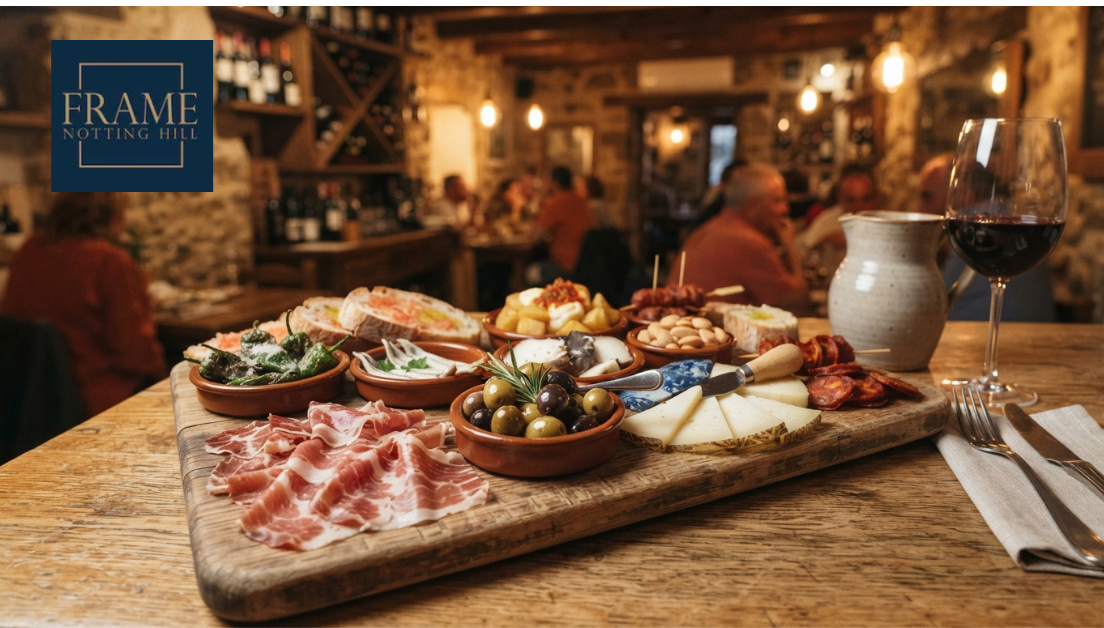
Para picar works differently. The portions are smaller and meant to be shared across the whole table rather than eaten by one person. Dishes often arrive in stages rather than all at once, which means there’s no fixed endpoint to “finish” before moving on. The meal simply unfolds at its own, more relaxed pace, with diners picking at dishes over a longer stretch of time.
Social Intent
A regular starter is functional. It serves to open the meal and whet the appetite before the main course arrives, and it’s usually eaten individually, with little interaction beyond polite conversation.
Para picar is built for a different purpose entirely. The dishes sit in the middle of the table, encouraging people to reach across, pass plates, and try things their neighbour ordered. It turns eating into something communal and interactive, where the food becomes a reason for people to engage with each other rather than simply fuel the meal.
Menu Structure
A traditional menu follows a clear progression. Order a starter, and there’s an expectation it leads into a main course, followed by dessert. The structure is linear and predictable.
Para picar removes that structure altogether. Diners might order five or six small dishes at once, with no obligation to follow them with anything else. There’s no “next course” to wait for. The format is flexible by design, letting the table decide how much or how little to order, and in what order the dishes arrive.
Flavour Variety
A single starter typically offers one flavour profile from start to finish; whatever’s on that plate is the entire experience.
Para picar, by contrast, lets diners sample several flavour profiles in a single sitting. Something salty next to something smoky, something fresh alongside something rich. Rather than committing to one dish, the table experiences a spread of contrasts, which is part of what makes the format feel more exploratory than a single starter ever could.
Why the Sharing Format Changes the Whole Experience
Because para picar dishes arrive together and get passed around, the meal naturally slows down. There’s more time between bites, more back-and-forth conversation, and more room to try things you might not have ordered on your own. It changes dining from a straight-line experience into something closer to a shared discovery, which is a large part of why Spanish dining has become so popular for groups, dates, and long, unhurried evenings out.
What are the Classic Para Picar Dishes to Try
Some dishes are practically built for this style of eating:
- Patatas Bravas: crispy potatoes with a spiced tomato sauce, made for sharing
- Jamón Ibérico: thinly sliced cured ham, best enjoyed in small amounts across the table
- Croquetas: golden, creamy, and gone within minutes
- Prawn Croquetas: crisp on the outside, packed with a creamy prawn filling inside
- Smoked Anchovies: rich, salty, and full of depth, best enjoyed on their own or over bread
- Padrón Peppers: blistered, salted, and always a little unpredictable
- Olives and Marinated Anchovies: small but essential parts of any para picar spread
Where to Try Para Picar in Notting Hill, London
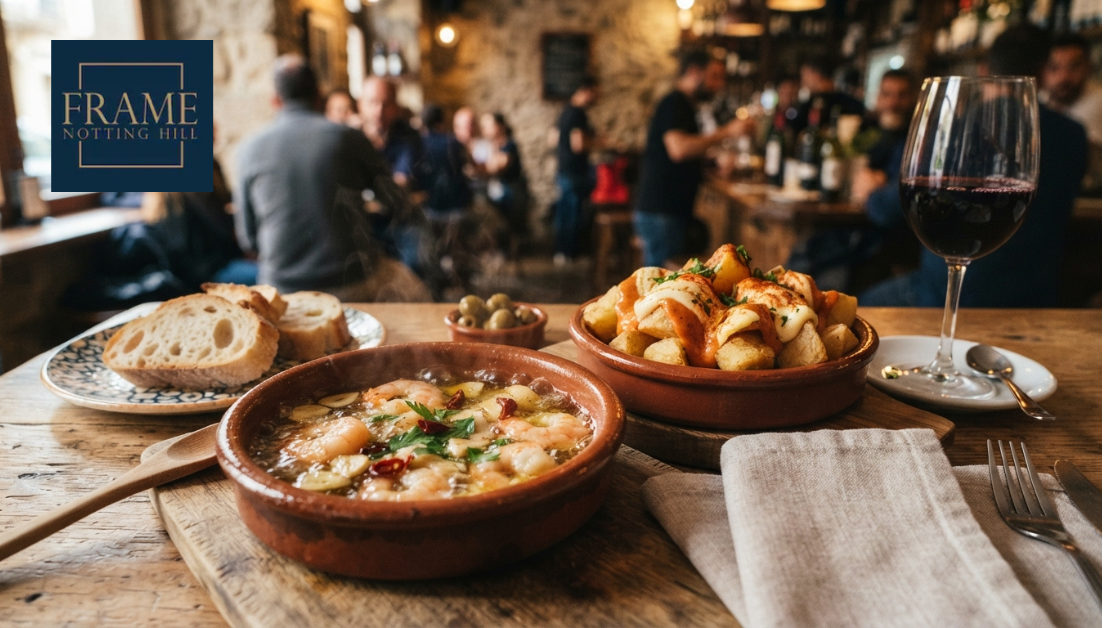
If you are dining in Notting Hill and want to experience para picar prepared with authenticity and care, Frame Restaurant London is a reliable choice, offering a genuine take on shared Spanish small plates with a focus on quality ingredients, traditional technique, and beautiful presentation.
As one of the best restaurants in London, we built our menu around bold, rich flavours, carefully sourced ingredients, and a warm dining experience that makes every meal feel special and shared. Our para picar selection, from crispy Patatas Bravas to rich Jamón Ibérico, is one of the most celebrated parts of our menu, consistently praised by guests as one of the best ways to experience true Spanish dining in London.
Book your table today and experience Para picar done the right way, right here in Notting Hill, London.
Conclusion
Para picar isn’t just a smaller version of a starter course. It’s a completely different way of approaching a meal, built around sharing, variety, and the conversation that happens around a table full of small plates. That’s what sets it apart from every other starter course out there, and it’s exactly the kind of dining experience we’ve shaped our menu around at Frame.