

Few things in the world capture the spirit of a nation quite like its food. In Spain, no style of eating does this more completely than tapas. But why are tapas so important to Spanish culture? The answer goes far deeper than the food itself.Tapas are small plates, bold flavours, and a table full of good company. This is not just a way of eating. It is a way of living. Today, that spirit has travelled far beyond Spain’s borders, and nowhere has it landed more naturally than in London. The Spanish tapas restaurants have built their entire philosophy around this tradition of authentic flavours, bold Mediterranean dishes, and a warm, welcoming atmosphere where every visit feels like a genuine celebrationIn this guide, we explore exactly why the importance of tapas in Spanish culture has grown over time and why London has become one of the best cities outside Spain to truly experience it.
 Every region tells its own story through food, and every tapa carries centuries of local tradition and pride. London’s finest tapas restaurants draw from all of these regional influences, bringing the full breadth of Spain’s culinary map to a single table.
The Origins of Tapas
The word tapa literally means “lid” or “cover” in Spanish. Legend has it that tapas were born in the taverns of Andalusia, where bartenders placed a small slice of bread or cured meat over a glass of wine to keep flies out. Over time, these small coverings evolved into small bites of food served alongside drinks as a gesture of hospitality.Another popular theory credits King Alfonso XIII, who reportedly ordered a wine at a taverna in Cadiz. The waiter covered it with a slice of ham, and the king enjoyed it so much he ordered another with the same cover. Whether legend or history, the story perfectly captures the spirit of tapas:- Born from simplicity and generosity
- Rooted in a desire to welcome and serve guests
- Built on the pleasure of sharing food with others
Tapas as a Social Ritual
Tapas are rarely about food alone. They are fundamentally a social ritual. The Spanish concept of ir de tapas, going out for tapas, is about so much more than eating. It is about moving from bar to bar with friends, sharing plates, and spending hours in unhurried, genuine company. It is about breaking down social barriers over communal food and slowing down to savour every single moment at the table.Unlike a traditional sit-down meal, where each person orders individually, tapas encourages everyone to share. There are no individual portions, no dishes claimed by a single person. This simple act of communal eating creates a sense of warmth and togetherness that is deeply embedded in Spanish tapas cuisine, a tradition that has endured for centuriesIt is precisely this spirit that the best tapas restaurants in London work hard to recreate, bringing that same unhurried, generous energy to the heart of one of the world’s greatest food cities.The Regional Traditions Behind Every Tapas Dish
One of the most fascinating things about tapas is how dramatically they vary across Spain:| Region | Tapas Style | Most Famous Dish |
| Andalusia | Free with every drink | Marinated Olives, Padron Peppers |
| Basque Country | Pintxos on bread | Grilled Chorizo on Toast, Smoked Anchovies & Dill Cream |
| Galicia | Heavy seafood focus | Grilled Octopus Mojo Verde, Sautéed Prawns Garlic Butter |
| Madrid | Classic taberna style | Patatas Bravas & Aioli, Mushroom & Manchego Croquetas |
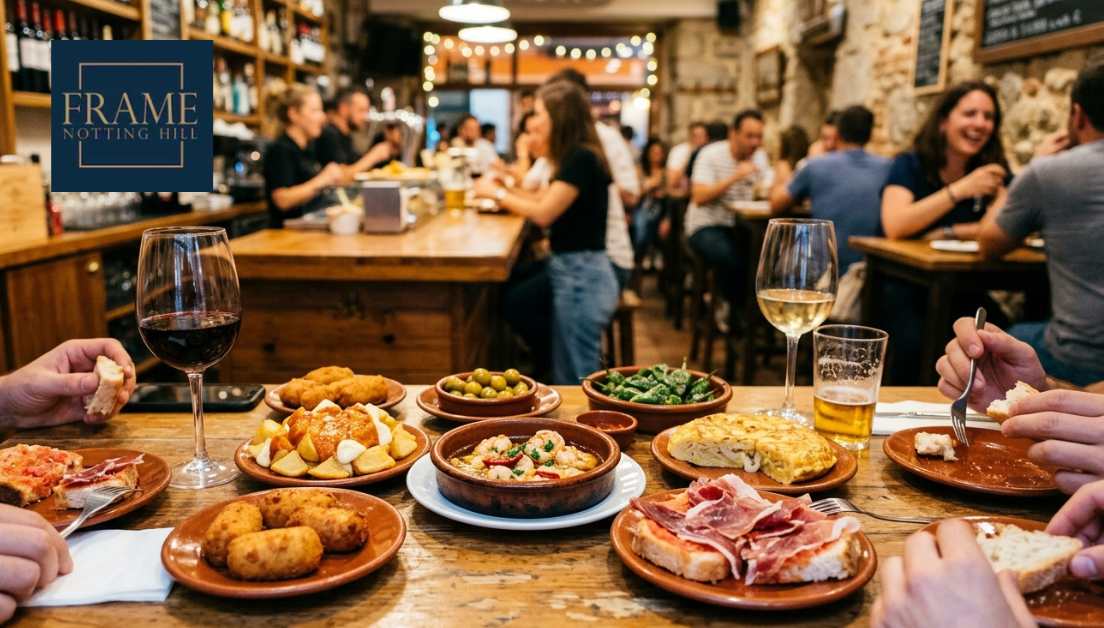 Every region tells its own story through food, and every tapa carries centuries of local tradition and pride. London’s finest tapas restaurants draw from all of these regional influences, bringing the full breadth of Spain’s culinary map to a single table.
 Why Tapas Matter More Than Any Other Spanish Tradition
This is the question at the heart of everything. Spain has many celebrated traditions, such as flamenco, the siesta, and the paseo. But none reach into daily life quite as deeply or universally as tapas, and none have found a more pasionate second home than in London. Here is why:A Symbol of Spanish Identity
Tapas represent the Spanish commitment to quality, bold flavours, and the pleasure of eating well. Wherever Spanish people travel, they carry this tradition with themFoundation of Social Life
The tapas bar is the centre of Spanish community life. It is where conversations happen, relationships are built, and genuine human connection replaces digital interactionA Bridge Between Generations
Grandparents share tapas with grandchildren. Parents teach children how to eat communally and generously. Tapas pass core Spanish values from one generation to the nextThe Soul of Spanish Culture
To eat tapas the Spanish way is to say that the people around you matter, the food deserves your attention, and this moment is worth savouring completelyThis is why tapas are not just an important part of Spanish culture. They are part of the culture in Spanish.Tapas in Spanish Daily Life
Tapas are part of everyday life as natural as the afternoon siesta. A typical Spanish day looks like this:- Morning: coffee with a small tapa
- Lunchtime: Leisurely tapas shared with colleagues
- Evening Bar: hopping with friends before a late dinner
Make Your Next Meal One to Share
Bring friends, family or someone special and enjoy the relaxed, social spirit of tapas at Frame Notting Hill.
BOOK YOUR TABLE CALL +44 203 375 2678How Tapas Have Influenced Global Food Culture
The influence of Spanish tapas extends far beyond Spain. Over the past two decades, the small plates sharing format has transformed dining worldwide:- New York, Tokyo, and especially London have all embraced tapas-inspired dining
- Small plates are now one of the most popular restaurant formats globally
- The principles of sharing, variety, and bold flavour define modern dining everywhere
For more recommendations, see our guide on
where to visit London for an authentic tapas experience
.
Experience Tapas at Frame Notting Hill
At Frame Notting Hill, tapas are not just a menu format; they are a philosophy. Every dish is designed to be shared, to spark conversation, and to create the warm, generous experience that defines Spanish culture at its best.Whether you are visiting for:- A casual dinner with friends
- A romantic date night
- A special family celebration
- A private dining event in our Indoor Garden or The Cellar