

A plate of small green peppers, hot off the pan, glistening with oil and dusted with sea salt, has a way of pulling everyone’s attention at the table. That is padron peppers for you, one of the most popular starters at the top restaurants in Notting Hill. No heavy sauces, no extra fuss, just blistered peppers meant to be eaten with your hands and shared with everyone around. That simplicity is what makes them so loved: smoky, salty, slightly charred, and just unpredictable enough to keep everyone reaching for one more.
If you worried that How to make padron peppers; In this article, we will walk you through: what padron peppers are, how to cook them properly at home so they come out blistered and flavourful every time, the common mistakes that ruin them, how they compare to shishito peppers, and the best way to serve them for a proper tapas-style spread. By the end, you will know everything you need to recreate this tapas classic in your own kitchen.
What Are Padron Peppers?
Padron peppers originate from the town of Padrón in Galicia, northwestern Spain, where they have been grown for centuries. These Spanish peppers are small, thin-skinned green peppers known for one quirky trait: most are mild, but every so often you bite into one that is surprisingly hot. This unpredictability has earned them the nickname “Russian roulette peppers” among tapas lovers, and it is part of what makes eating them so much fun.
Once cooked, padron peppers develop a soft, slightly wrinkled texture with a smoky char on the outside. The flavour is earthy and mildly sweet, with just enough heat now and then to keep things interesting.
Ingredients You’ll Need
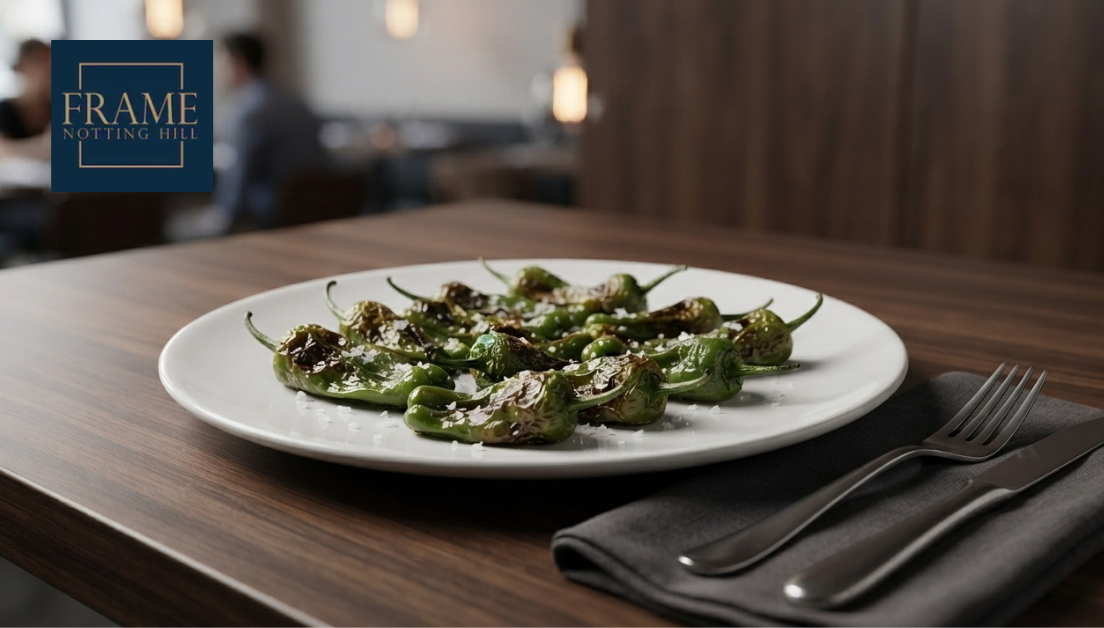
To make a classic padron peppers recipe, you only need three things:
- Fresh padron peppers
- Good quality olive oil
- flaky sea salt
If you want to add a twist, a squeeze of lemon or a light sprinkling of crushed garlic at the end works well, though purists will tell you the simplest version is the best.
How to Cook Padron Peppers (Step by Step)
For cooking padron peppers, you need to follow these steps:
Step 1: Wash and dry the peppers properly.
Rinse the peppers under cold water to remove any dirt, then dry them thoroughly using a clean kitchen towel or paper towel. This step is more important than it sounds. Any leftover moisture on the skin will cause the peppers to steam rather than fry, leaving soft, soggy peppers instead of that signature blistered char.
Step 2: Choose the right pan and heat the oil
Use a heavy-bottomed frying pan, cast iron if you have one, since it holds heat evenly. Add two to three tablespoons of olive oil and heat it on medium-high to high heat until it is shimmering and almost smoking. The oil needs to be properly hot before the peppers go in; otherwise, they will absorb oil and turn greasy rather than crisp.
Step 3: Add the peppers without overcrowding
Place the peppers into the pan in a single layer, leaving a little space between each one. If your pan is small, cook them in batches. Overcrowding the pan instantly lowers the oil temperature and traps steam, which prevents the peppers from blistering properly.
Step 4: Fry and turn until blistered
Let the peppers cook undisturbed for about a minute before turning them. Using tongs, turn them occasionally so each side gets exposed to the hot oil. You are looking for the skin to blister, bubble, and char in spots, usually taking about 5 to 7 minutes in total. The peppers should soften and collapse slightly while still holding their shape.
Step 5: Remove and season immediately
Once blistered, transfer the peppers straight onto a plate lined with kitchen paper to absorb any excess oil, then move them onto a clean serving plate. While they are still hot, sprinkle generously with flaky sea salt. Salting them at this stage helps the salt stick to the oily skin and dissolve slightly, giving every bite proper seasoning.
Step 6: Serve straight away
Padron peppers are at their best the moment they leave the pan. Serve them immediately while hot, holding each one by the stem, Spanish style, and biting in. Waiting too long will cause them to lose their crisp edges and turn soft.
Tips for Getting the Blister Right
Knowing how to make Padron peppers is only part of the process. A few simple techniques can make the difference between soft peppers and the perfectly blistered, flavourful tapas served in Spanish restaurants.
- Heat the pan properly: Use high heat before adding the peppers to create the signature blistered skin.
- Avoid overcrowding: Cook the peppers in a single layer to prevent steaming and ensure even charring.
- Season immediately: Sprinkle flaky sea salt over the peppers as soon as they come off the heat so it sticks to the hot surface.
- Serve straight away: Padron peppers are best enjoyed fresh from the pan, while they’re still hot and slightly crisp.
Common Mistakes to Avoid
Even a simple dish like this can go wrong in a few predictable ways:
- Overcooking the peppers until they turn mushy
- Under salting, which leaves the dish tasting flat
- Skipping the drying step before frying, since any moisture will prevent proper blistering
- Using oil that is not hot enough, which often results in greasy, limp peppers rather than a crisp, smoky bite
Padron Peppers vs Shishito Peppers
Padron peppers are often compared to shishito peppers, and while they look similar at first glance, there are some clear differences. Padron peppers come from Spain, while shishito peppers originate in Japan. In terms of heat, both are generally mild with the occasional hot one, though shishitos tend to have a slightly higher chance of packing some spice. Padron peppers have a thinner skin and a more earthy, savoury flavour, whereas shishitos lean slightly sweeter and have a touch more crunch.
In terms of cooking, the two are largely interchangeable and can be prepared using the same blistering method. If you cannot find one variety, the other makes a reasonable substitute, though true tapas purists will always reach for padron peppers when authenticity matters.
What to Have With Padron Peppers
Padron peppers work best as part of a wider tapas spread rather than on their own. They typically fall under Para Picar, the small plates meant for sharing, and pair naturally with:
- Patatas bravas
- Grilled octopus
- Crusty bread
- Grilled chorizo
- Marinated olives
- Steak
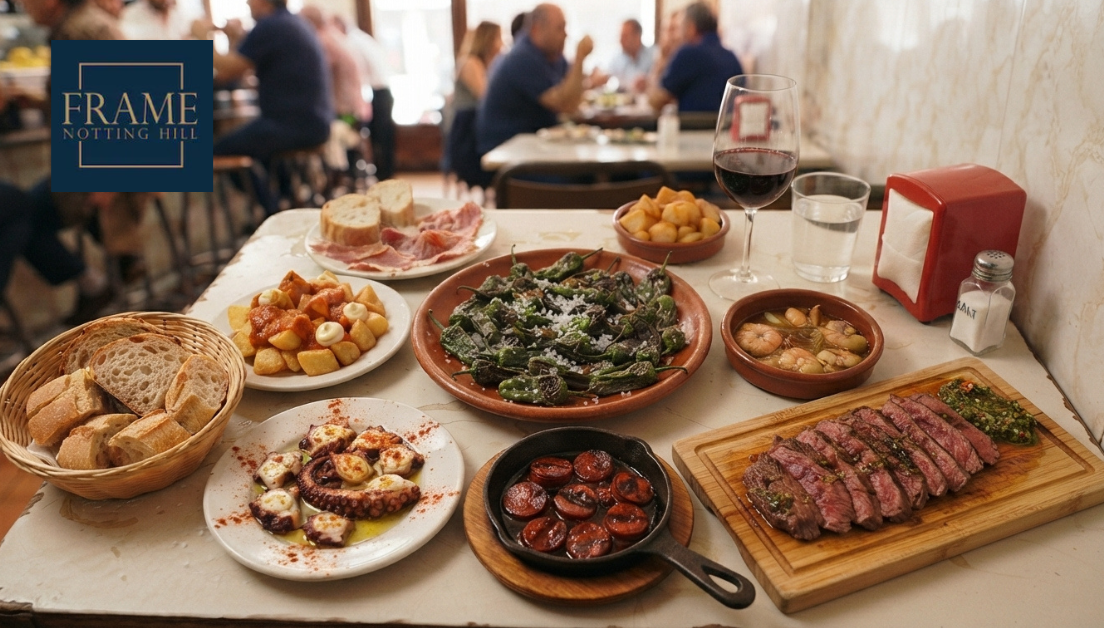
To drink, a glass of chilled sherry, particularly a fino or manzanilla, or a crisp white wine complements the dish well. Some restaurants also serve padron peppers with a side of aioli or a lemon wedge for a slightly different take, though the traditional version is simply peppers, oil, and salt.
Where to Try Authentic Padron Peppers in Notting Hill
While making padron peppers at home is simple enough, there is something special about having them prepared by people who have spent years perfecting the technique. As the best restaurant in Notting Hill, Frame brings authentic Spanish-inspired tapas to the table, and padron peppers are a regular feature on our menu, cooked the traditional way, blistered to perfection and served as part of a proper sharing experience.
If you are in the Paddington or Notting Hill area and fancy tasting them done right, take a look at our menu and come find your new favourite starter.
Conclusion
Padron peppers may look simple, but getting that perfect blister, smoky char, and salty finish takes a bit of technique. With hot oil, a hot pan, and a steady hand, you wonder that How to make padron peppers but you can easily recreate this beloved tapas classic in your own kitchen. Just remember the basics: dry your peppers well, do not overcrowd the pan, and salt them the moment they come off the heat.
Visit us at Frame Notting Hill and try our padron peppers along with the rest of our tapas menu, made fresh, served the traditional way, and best enjoyed with good company.
Book your table today and taste the difference for yourself.