

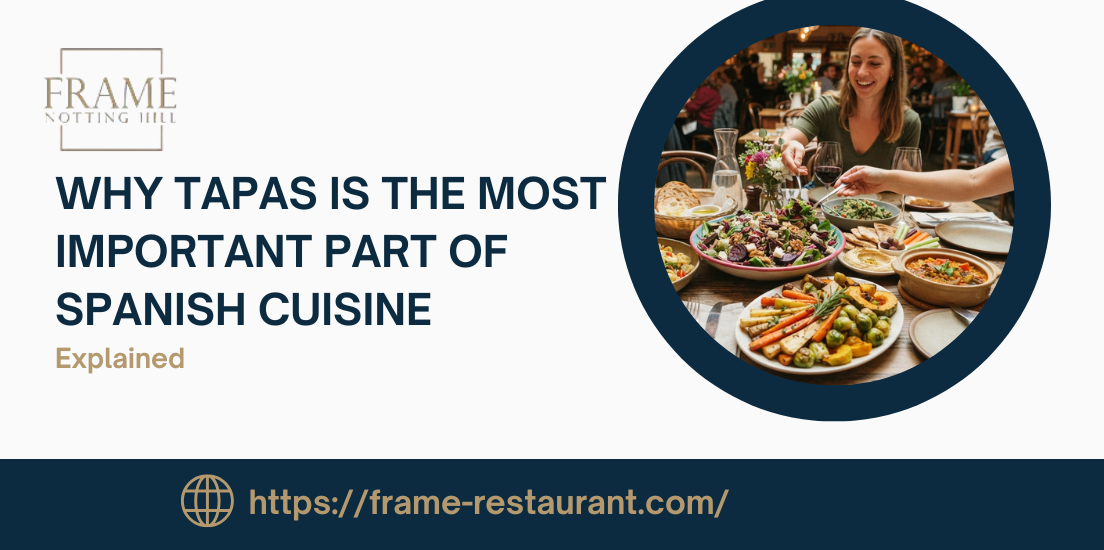
There’s a moment that happens in every good tapas bar. A small plate lands on the table, still warm, and before anyone has said a word, three forks are already reaching for it. That’s the entire philosophy of Spanish cuisine in one gesture: food made to be shared, savoured slowly, and enjoyed without ceremony.
Tapas often get mistaken for appetisers or side dishes, something to nibble on before the ‘real’ meal begins. But if you’re wondering what is tapas at its core, it isn’t a side dish; it’s the main event. To understand why Spanish tapas cuisine has earned its place among the world’s most celebrated food cultures, you have to see tapas not as a category of food but as a complete culinary philosophy.
Tapas Origin and the Philosophy of Small Plates
The story behind the word “tapa” (cover or lid) is well known among anyone who’s explored Spanish food culture, so rather than repeat the history of tapas here, let’s focus on something more relevant to cuisine: why the Spanish small plates format itself became a lasting culinary philosophy, not just a historical accident. What makes tapas different from a Western-style appetiser isn’t the plate size. It’s the intention behind it:
- An appetiser exists to prepare your palate for something bigger
- A tapa exists as a complete idea in itself, a fully realised dish scaled down to its most essential, flavourful form
This is why a small plate can feel just as satisfying as a full entrée elsewhere. Nothing is held back for later. Every element is there to deliver flavour immediately.
This philosophy also gives Spanish chefs something rare: the freedom to explore. Instead of building one dish meant to satisfy an entire meal, chefs create several smaller dishes, each one focused, each one distinct. It’s cooking built around variety rather than volume.
The Shared-Plate Structure Behind Tapas
Most cuisines follow a familiar structure: starter, main course, dessert. Spanish dining, especially when it comes to tapas, rejects that format entirely. There’s no single centrepiece dish that the rest of the meal revolves around; instead, the table fills gradually, with dishes arriving as they’re ready rather than in a strict order.
This format changes the way food is made:
- Chefs aren’t constrained by portion sizes meant to fill a plate at dinner
- They can focus purely on flavour, texture, and balance in a smaller frame
- Menus can hold ten, fifteen, even twenty different dishes, each one a chance to experiment
For diners, this turns the meal into an experience of discovery rather than a single decision — you’re not choosing one dish and living with it, you’re tasting your way through a kitchen’s entire range.
Ingredients That Define Spanish Tapas
Because tapas are small, every ingredient has to earn its place in Spanish tapas recipes. There’s no room for filler. This is where the true character of Tapas cuisine comes through.
The Everyday Essentials
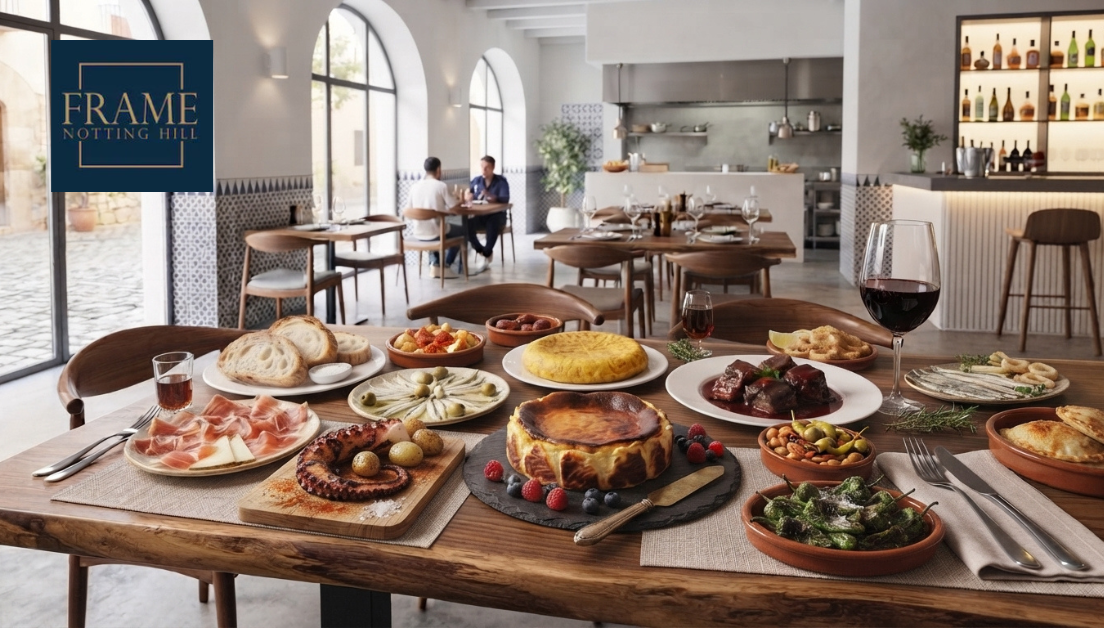
Olive oil sits at the centre of nearly everything, used not just for cooking but as a finishing touch that ties dishes together. Jamón ibérico, cured slowly and sliced thin, remains one of the most prized ingredients in the country, its rich, nutty flavour needing nothing more than good bread.
Coastal Flavours
Along the coasts, fresh seafood takes over. Dishes like gambas al ajillo (garlic prawns) show how a handful of simple ingredients- garlic, chilli, olive oil- can create something remarkable.
Inland Traditions
Inland, the ingredients shift toward heartier options: cured meats, aged cheeses, and root vegetables that hold up well to slow cooking.
This regional variation isn’t incidental. It reflects Spain’s geography and agricultural history, and it’s part of why tapas across the country never feel repetitive. Each region brings its own take on quality, simple ingredients, shaped by what grows or is caught nearby.
Theek h, har technique ko 3 lines mein expand kar deti hun.
Cooking Techniques Behind Classic Tapas
Tapas draw on a wide range of cooking techniques, and part of what makes the tradition so rich is how many methods coexist on a single menu.
Frying
Frying produces some of the most beloved tapas, crisp exteriors giving way to soft, creamy centres. Croquetas are the clearest example, a creamy filling coated in breadcrumbs and fried until golden. The technique relies on the right oil temperature, hot enough for a quick, crisp finish without drying out the inside.
Grilling
Grilling brings out the natural flavour of ingredients without masking them in heavy sauces. Grilled octopus (pulpo a la gallega) is a classic example, often finished with nothing more than olive oil, salt, and paprika. The high heat adds a light char while keeping the inside tender, letting the ingredient speak for itself.
Slow Cooking
Slow cooking is essential for building real depth in rich, hearty dishes. Patatas bravas relies on it for the sauce, reducing tomato and pepper over low heat until the flavours concentrate properly. The same principle applies to dishes like slow-cooked oxtail, where hours of gentle cooking break down the meat until it’s tender enough to fall apart, developing a depth of flavour that quick cooking simply can’t achieve.
Curing
One of Spain’s oldest food preservation techniques, curing is responsible for the country’s most iconic ingredient: jamón. The process involves salting the meat and air-drying it over an extended period, allowing the flavour to intensify. Sliced thin, it’s often served on its own, needing no further preparation.
What ties these techniques together is restraint. Spanish cooking rarely overcomplicates a dish. The goal is always to let quality ingredients speak for themselves, using technique to enhance rather than mask their natural flavour.
Pairing Philosophy: Wine, Vermouth, and Tapas
In Spanish cuisine, food and drink are rarely treated as separate decisions. Each tapa is often created with a specific pairing in mind. Lighter dishes, like seafood or salads, tend to sit well with crisp white wine or a glass of vermouth. Richer, heavier plates, cured meats, fried dishes, and slow-cooked sauces call for something bolder, like a full-bodied red.
This pairing philosophy reflects the same principle that runs through everything about tapas: balance. Nothing is meant to overpower anything else. The drink complements the dish, and the dish complements the drink, creating a rhythm that carries through an entire meal.
Tapas and Modern Gastronomy Trends
A Global Dining Trend
Small-plate dining has become a global phenomenon, and its roots trace directly back to Spanish tapas culture. Restaurants around the world now build entire menus around the idea of sharing multiple small dishes rather than serving one plate per person, a format that Spain had already perfected long before it became a worldwide trend.
From Spanish Bars to London Restaurants
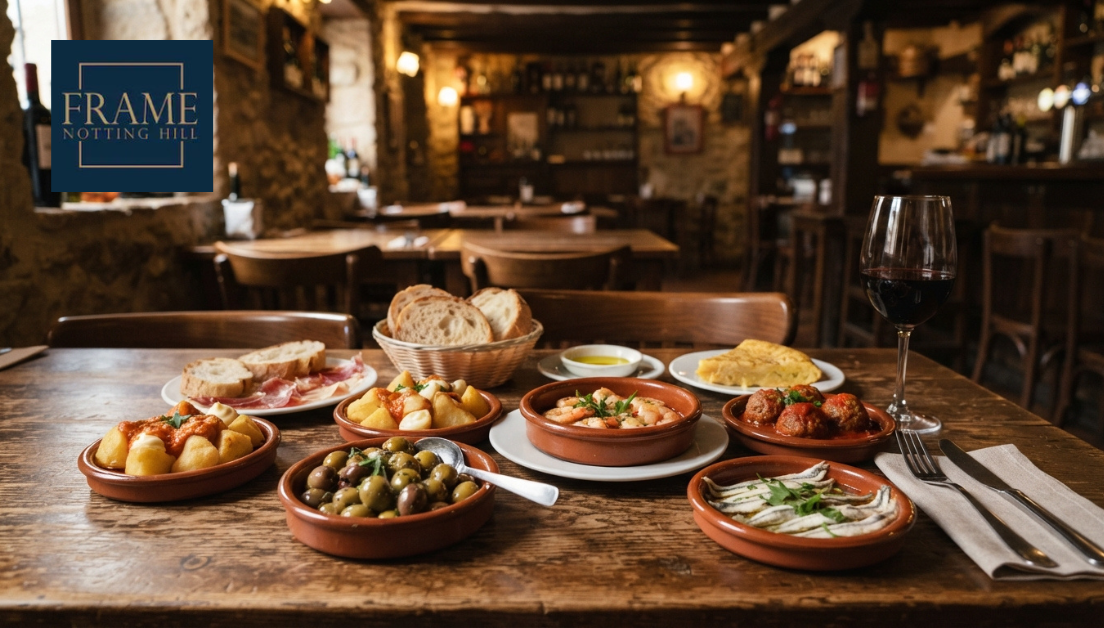
Top chefs across Spain have taken this tradition even further, using tapas as a foundation for high-level culinary innovation. Many of the country’s most celebrated chefs began by mastering the fundamentals of tapas: precision, balance, and the ability to make a small dish feel complete. That same grounding has travelled far beyond Spain, and today it shapes some of the best tapas restaurants in Notting Hill, including Frame Notting Hill, where the same principles of technique and quality are brought to life in a new setting.
Tapas at Frame Notting Hill, London
At Frame Notting Hill, tapas isn’t just something on the menu; it’s the whole approach to how we cook and serve food. Located at 39 Hereford Rd, London, we bring the same principles that define Spanish tapas: quality ingredients, traditional technique, and dishes made for sharing.
Our menu includes a range of classics, each built around the ingredients and techniques that define authentic Spanish tapas:
- Crisp, golden croquetas
- Slow-cooked patatas bravas
- Padrón peppers
- Gambas al ajillo
- Char-grilled dishes finished simply with olive oil and sea salt
Every plate is made with the same intention: full flavour in a small format, meant to be shared across the table. We also offer a thoughtfully curated wine selection to pair with your tapas, along with vegetarian and vegan options for those looking for plant-based options.
Come taste it for yourself. Book a table at Frame Notting Hill today.
Conclusion
Tapas aren’t a smaller version of Spanish cuisine. They are Spanish cuisine, distilled into its most honest form. Every element, from the ingredients to the techniques to the way dishes are paired with drinks, reflects a culinary philosophy built on quality over quantity and flavour over formality.
It’s a tradition that has shaped the culture of food in Spain for generations, one built on sharing, patience, and letting good ingredients speak for themselves. And it’s a tradition you can experience for yourself, plate by plate, right here at Frame Notting Hill.