

In this guide, we break down everything you need to know about tapas restaurants: their origins, how they work, what you can expect to eat, and why they offer one of the most enjoyable dining experiences available today.
If you have ever walked past a lively restaurant filled with the sound of laughter, clinking glasses, and the smell of sizzling garlic prawns drifting through the door, there is a good chance it was a tapas restaurant. But what exactly is a tapas restaurant, and why has this style of dining captured the hearts of food lovers not just in Spain, but across the globe, including right here in London?
What Is a Tapas Restaurant?
A tapas restaurant is built around a Spanish style of dining that prioritises serving small dishes of various items, including roasted vegetables, fresh seafood, and other traditional preparations, ordered all at once and meant to be shared among guests.
Unlike a conventional restaurant where you order a single main course, a tapas restaurant invites you to build your meal from multiple smaller plates. A tapas restaurant generally does not focus on entrées; tapas are the main, and sometimes only, part of the menu. This encourages guests to stay longer, explore more of the menu, and keep the conversation flowing.
The main characteristics of a tapas restaurant include:
- Small plates instead of large mains – each dish is designed for sharing
- Social dining – the experience encourages conversation and interaction
- Variety – mix and match different dishes, including vegetarian, seafood, and meat options
- Lively atmosphere – informal, relaxed, and welcoming
Whether you are new to tapas dining or exploring the best restaurant in Notting Hill , this style of eating offers a communal, flavorful, and fun experience.
The Origins of Tapas Restaurants
Tapas dining comes from Spain, where small dishes called tapas were served to accompany drinks. Traditionally, tapas were snacks placed over drinks to protect them from dust or flies, eventually evolving into full dishes.
Today, tapas restaurants preserve the culture of sharing, offering diverse Spanish cuisine in a modern setting. Today, small plates restaurants in London often blend traditional recipes with innovative twists, catering to a wide range of tastes.
What Kind of Food Does a Tapas Restaurant Serve?
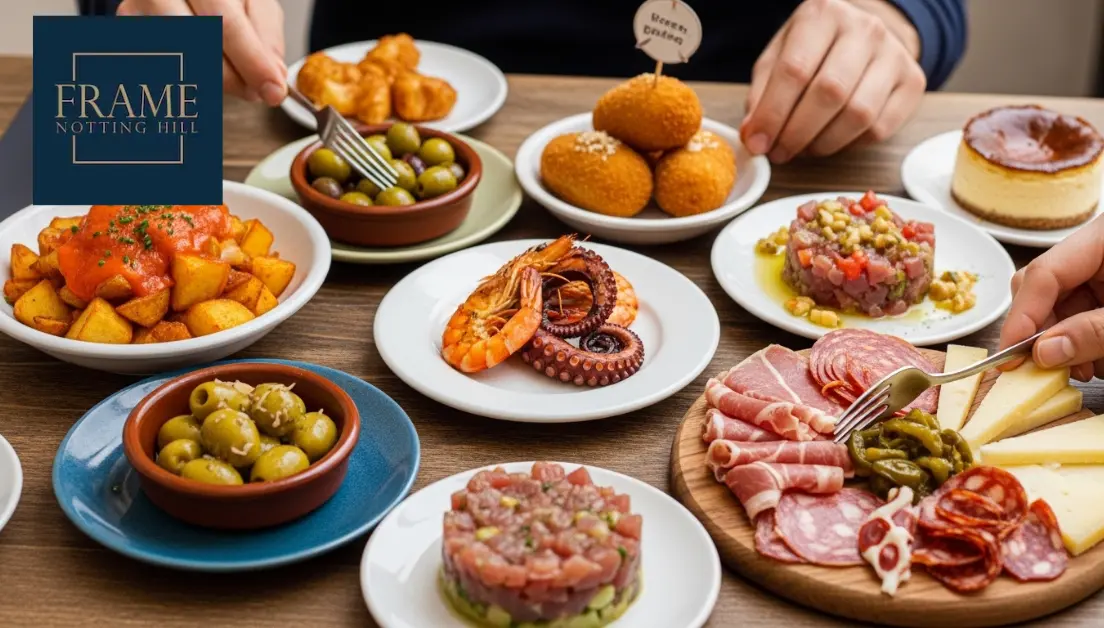
A tapas restaurant serves a wide variety of small dishes, often organised into categories. Here’s what you can expect:
Snacks and Small Bites (Para Picar)
- Light dishes designed to start the meal:
- Marinated olives
- Artisan bread with olive oil
- Padrón peppers with sea salt
- Croquetas (mushroom, Manchego, or prawn)
- Charcuterie and cheese boards
- Truffle and pecorino nut mixes
Vegetarian Tapas
Tapas restaurants focus on inventive vegetarian dishes:
- Patatas bravas with aioli
- Burrata with sundried tomato and herb dressing
- Roasted pumpkin and cauliflower with tahini purée and pomegranate
- Grilled cauliflower with confit garlic and carrot purée
- Fig and beetroot salad with ajo blanco and watercress
Seafood Tapas
Seafood is a cornerstone of tapas dining:
- Ceviche with coriander oil and pink grapefruit
- Tuna tartare with watermelon and jalapeño dressing
- Sautéed or grilled prawns in garlic butter
- Cod stuffed piquillo peppers with mojo rojo
- Grilled octopus with celeriac purée and mojo verde
Meat Tapas
Richly flavoured and often slow-cooked or grilled:
- Grilled chorizo on toast with piquillo sauce
- Duck breast with smoked aubergine purée and pomegranate glaze
- Slow-cooked oxtail with parsnip and leek purée
- Pluma Iberica with mushroom purée and chimichurri
- Dry-aged ribeye steak with chimichurri sauce
Desserts
Tapas desserts are lighter and perfect for sharing:
- Basque cheesecake with sorbet and cinnamon nut crumble
- Dark chocolate fondant with brandy and sorbet
- Fruit sorbets such as strawberry basil and passion fruit
Modern tapas restaurants often put creative twists on traditional Spanish dishes, using fresh seasonal ingredients to cater to diverse tastes, including vegetarian and vegan options.
Curious to see how these dishes come together? Explore the full Frame Notting Hill menu, featuring seasonal tapas, signature small plates, carefully selected wines and desserts.
How does Ordering at a Tapas Restaurant in London Works?
At a tapas restaurant in London, the tapas menu is typically divided into categories: snacks to start, vegetarian dishes, seafood, meat, and desserts. Rather than choosing one dish each, a table will usually order several plates to share across all of these sections.
A practical guide for ordering:
- Two to three tapas per person is a good starting point
- Begin with lighter snacks, olives, bread, croquetas, before moving to the more substantial plates
- Mix cold and warm dishes to keep the meal varied and interesting
- Order in rounds rather than all at once, so the table can see how hungry everyone is as the meal progresses
A well-balanced meal might start with marinated olives and artisan bread, then move to padron peppers and croquetas, continue with ceviche or grilled prawns, and finish with a meat dish like duck breast or oxtail.
What Makes a Tapas Restaurant Good?
Not all tapas restaurants in London are equal. The best ones share a number of qualities that elevate the experience beyond simply eating small portions.
A creative menu: The finest tapas restaurants go beyond the basics. They take classic dishes and add their own character, layering flavours, using quality ingredients, and presenting food that surprises you. Dishes like tuna tartare with watermelon or roasted pumpkin with tahini and pomegranate are examples of a kitchen applying genuine creativity to the format.
A strong vegetarian offering: Tapas dining naturally suits vegetarians because of its variety, but a truly good tapas restaurant dedicates real attention to its meat-free dishes, not just one or two options, but an entire section with thoughtfully composed plates.
Great wine: Tapas and wine are inseparable. A proper tapas restaurant will have a carefully curated wine list that complements the food from crisp whites for seafood to fuller reds for richer meat dishes.
The right atmosphere: Tapas is a social format, and the setting matters enormously. The best tapas restaurants feel warm, personal, and unhurried, a place where you genuinely want to stay for another glass.
Attentive service: Because dishes arrive progressively and the meal is built from multiple plates, the service at a tapas restaurant needs to be engaged and well-paced. Good service makes the difference between a meal that flows and one that feels disjointed.
Private Dining at a Tapas Restaurant in London
Many tapas restaurants offer private dining spaces dedicated rooms for groups who want a more exclusive experience. These are ideal for birthdays, anniversaries, business dinners, and celebrations.
A good private dining offer at a tapas restaurant will typically include a personalised menu, attentive dedicated service, and a space that feels intimate rather than simply sectioned off from the main room.
- Garden-style rooms: tranquil, greenery-filled spaces with soft lighting and a relaxed ambience, suited to celebrations and social gatherings
- Cellar rooms: warm, wine-inspired spaces with rustic textures and an intimate atmosphere, well suited to business dinners and special occasions
Who Is Tapas Dining Suited To?
One of the reasons tapas restaurants have become so popular is that the format works for almost every occasion and every type of diner.
For groups, tapas is the ideal format for dining. Multiple dishes mean everyone at the table can find something they enjoy, regardless of dietary preference.
For vegetarians and vegans, a well-composed tapas menu will have an extensive meat-free section, with dishes that are satisfying and inventive rather than an afterthought.
For those with dietary requirements, because dishes are ordered individually, diners can easily avoid allergens or ingredients that do not suit them. Most tapas menus clearly label allergens including gluten, dairy, nuts, and shellfish.
For couples, tapas dining encourages sharing and conversation in a way that a traditional two-course meal simply does not. The pace is slower and more intimate.
For those who find it hard to choose, the whole point of tapas is that you do not have to. Order a little of everything and discover what you love.
Tapas and Wine: An Essential Pairing
Wine is not an optional extra at a tapas restaurant; it is a central part of the experience. The rhythm of ordering small plates naturally lends itself to taking your time over a glass, refilling as new dishes arrive, and pairing wines with each course.
Spanish whites and rosés pair beautifully with seafood tapas. A light red works well alongside croquetas and charcuterie. Fuller-bodied reds complement richer meat dishes such as slow-cooked oxtail or Iberian pork. For those who prefer sparkling wine, a crisp cava or sparkling white is a natural partner for almost anything on a tapas menu.
Experience Tapas in London at Frame Restaurant
If you are looking for a restaurant that brings together the warmth of Spanish hospitality with exceptional food and an inviting atmosphere, Frame Notting Hill is your destination. Located in the heart of Notting Hill, London, we invite you to discover the joy of sharing, one small plate at a time. Book Your Table at our restaurant Now!
FAQ's
As a general guideline, plan for two to three tapas per person. If you are in a larger group, consider ordering some favourite dishes twice to ensure everyone gets enough.
Yes, most tapas menus include a solid selection of vegetarian options from patatas bravas and tortilla to roasted peppers, cheese boards, and stuffed vegetables. Many London tapas restaurants also cater well for vegan and gluten-free diners.
Yes! At Frame Notting Hill Restaurant, bookings are welcomed and recommended, especially for larger groups or weekend evenings. While tapas bars often have a lively walk-in vibe, reserving a table at Frame ensures you’ll enjoy a seamless dining experience with our full menu of authentic tapas and signature dishes.