

At Frame Notting Hill, our 28-day dry-aged ribeye is proudly featured on our menu, and in this guide we share everything you need to know about what makes this cut so exceptional, how to cook it to perfection at home, and what to look for when choosing and preparing it yourself.
What Is Ribeye Steak?
Ribeye steak is cut from the rib section of the cow, specifically from ribs nine through eleven. It contains several muscles, the largest being the longissimus dorsi, the same tender muscle found in a strip steak, along with the spinalis dorsi, or rib cap, which is the fattier, more flavourful outer portion of the cut.
What makes ribeye so prized is its marbling, the fine white streaks of intramuscular fat that run throughout the meat. When cooked, this fat renders and distributes its flavour through every bite, producing the characteristic juiciness and depth of taste that ribeye is famous for. If you’re curious about the nutritional breakdown, you can find out how many calories are in ribeye steak here.
Ribeye is available in two forms:
- Boneless ribeye: Easier to cook evenly and ideal for getting a caramelised crust on all sides.
- Bone-in ribeye: Takes slightly longer to cook since the bone acts as an insulator, but holds its shape well and makes for a striking presentation. Flavour-wise, both are equally delicious.
How to Choose the Best Ribeye Steak
Before you cook, you need to select the right cut. Here is what to look for:
Thickness: Always choose a ribeye that is at least 1 inch thick. Thicker steaks are more forgiving and easier to cook to your preferred doneness without drying out.
Marbling: Look for plenty of fine white fat running evenly through the meat. More marbling equals more flavour and juiciness during cooking.
Colour: A good ribeye should be a deep, vibrant red. Avoid cuts that look grey or dull.
Grass-fed vs grain-fed: Grass-fed ribeye tends to be leaner with a slightly more complex, mineral-forward flavour. Grain-fed ribeye is richer and more buttery. Both are excellent; it comes down to personal preference.
Grade: If possible, choose USDA Prime or Choice (or the British equivalent: dry-aged or high-grade British beef). Premium quality beef makes a noticeable difference.
What You Need to Cook Ribeye Steak
Ingredients (serves 2)
- 2 boneless ribeye steaks, approximately 1 inch thick (around 300–400g each)
- 1½ teaspoons coarse sea salt
- 1 teaspoon freshly cracked black pepper
- 1½ tablespoons high smoke-point oil (avocado, rapeseed, or vegetable oil)
- 2 tablespoons unsalted butter
- 3 garlic cloves, lightly crushed
- 3–4 sprigs of fresh thyme or rosemary
Equipment
- Cast iron skillet (highly recommended) or heavy-based stainless steel pan
- Meat thermometer
- Tongs
- Aluminium foil (for resting)
How to Cook Ribeye Steak: Step-by-Step
Step 1: Bring the Steak to Room Temperature
Remove your ribeye from the fridge 30 to 40 minutes before cooking. Cooking a cold steak straight from the refrigerator leads to uneven results, the outside overcooks while the centre remains underdone. Allowing it to come to room temperature ensures more consistent cooking throughout.
Step 2: Dry and Season the Steak
Pat the steak completely dry with kitchen paper. Moisture on the surface of the meat creates steam rather than a sear, preventing the desirable caramelised crust from forming.
Season both sides generously with coarse sea salt and freshly cracked black pepper. If you have time, season the steak up to 12 hours in advance and leave it uncovered in the fridge; this draws moisture from deep within the meat, concentrating the flavour and helping it cook more evenly.
Step 3: Preheat Your Pan
Place a cast iron skillet over high heat and allow it to get very hot. You should see light wisps of smoke rising from the dry pan. A properly preheated pan is the single most important factor in achieving a deep, golden sear.
Once the pan is smoking hot, add your oil and allow it to heat briefly before adding the steak.
Step 4: Sear the Ribeye
Place the steak in the pan and do not move it. Allow it to cook undisturbed for 1.5 to 3 minutes until a deep brown crust has formed on the underside. Resist the urge to press or move the steak; this releases juices and prevents even browning.
Flip the steak using tongs (never a fork, which pierces the meat and lets juices escape) and cook the second side for another 1.5 to 2 minutes.
Step 5: Baste with Herb Butter
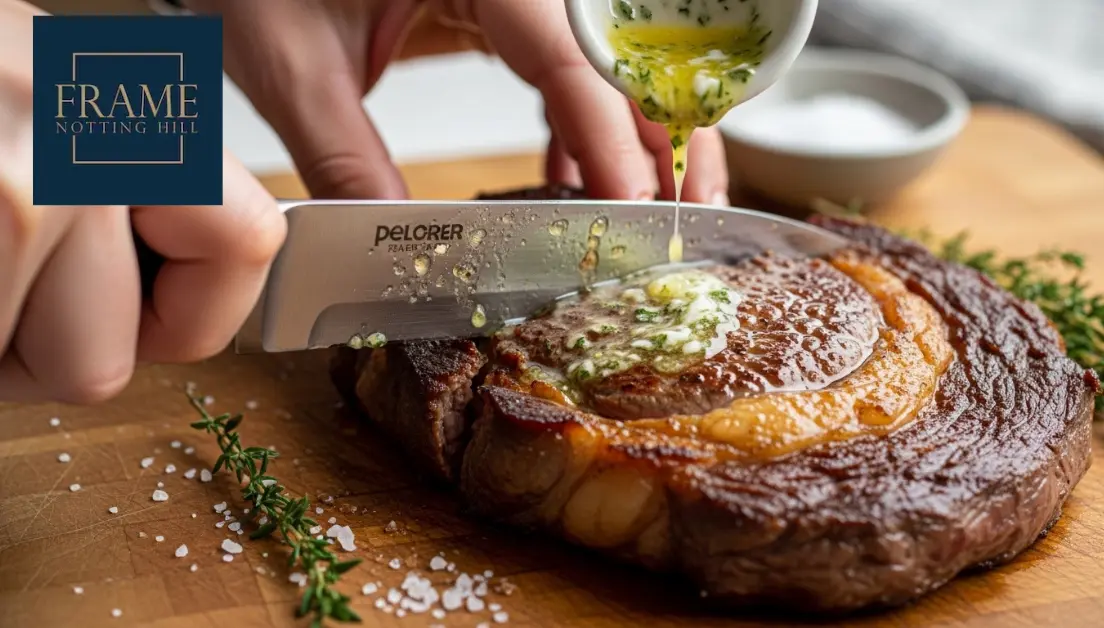
Reduce the heat to medium. Add the butter, crushed garlic, and fresh thyme or rosemary to the pan. As the butter melts and begins to foam, tilt the pan slightly and use a spoon to continuously baste the steak with the aromatic butter for 1 to 2 minutes.
This step adds richness, infuses the meat with herbal flavour, and gives the crust an incredible depth.
Step 6: Check Internal Temperature
Use a meat thermometer inserted into the thickest part of the steak to check doneness. Remove the steak from the pan approximately 5°F (3°C) below your target temperature, as the meat will continue to cook as it rests.
Doneness | Remove at | Final Temperature |
Rare | 115°F / 46°C | 120–125°F / 49–52°C |
Medium-Rare | 125°F / 52°C | 130–135°F / 54–57°C |
Medium | 135°F / 57°C | 140–145°F / 60–63°C |
Medium-Well | 145°F / 63°C | 150–155°F / 65–68°C |
Well Done | 155°F / 68°C | 160°F+ / 71°C+ |
For ribeye, medium-rare is widely considered the ideal doneness; the fat has had enough heat to fully render and distribute through the meat, giving maximum flavour and juiciness without toughening the texture.
Step 7: Rest the Steak
Transfer the steak to a plate or cutting board and tent loosely with foil. Allow it to rest for at least 5 to 10 minutes before cutting.
Resting is not optional; it is essential. During cooking, heat drives the juices toward the surface of the meat. Resting allows those juices to redistribute evenly throughout. Cut too soon, and they will pool on your plate instead of staying in the steak.
Step 8: Slice and Serve
If serving sliced, always cut against the grain perpendicular to the direction of the muscle fibres. This shortens the fibres and makes each piece noticeably more tender.
Spoon any remaining garlic herb butter from the pan over the steak before serving.
Other Methods for Cooking Ribeye Steak
While pan-searing is the most popular and accessible method, ribeye responds beautifully to several other cooking techniques.
Grilling Ribeye Steak
Grilling imparts a smoky, charred quality that complements the rich flavour of ribeye particularly well. Set up a two-zone fire, one side of the grill on high heat for searing, and one side on medium-low for finishing.
Sear the ribeye over high heat for 3 to 4 minutes per side until charred, then move to the cooler zone and cook to your desired internal temperature. For a 1-inch steak cooked to medium-rare, total grill time is typically 9 to 12 minutes. For a 1.5-inch steak, allow 12 to 15 minutes.
Be aware that ribeye’s high fat content can cause flare-ups on a charcoal grill, keep a close eye and move the steak if needed.
Oven Finishing (Skillet-to-Oven Method)
This method is ideal for thicker cuts and produces results very close to a professional steakhouse.
Sear the ribeye in a cast iron skillet on the stovetop for 4 minutes per side to develop the crust, then transfer the pan directly to a preheated oven at 180°C (350°F). Finish cooking in the oven for 10 to 20 minutes depending on thickness and desired doneness. Remove and rest before serving.
Reverse Searing
Reverse searing flips the traditional method: the steak is slow-cooked in a low oven first (around 135°C / 275°F) until it reaches 10–15°F below the target temperature approximately 15 minutes, then transferred to a screaming-hot skillet for a final 1 to 2-minute sear per side.
This technique produces exceptionally even cooking from edge to edge, with a thinner grey band around the outside and a more consistent colour throughout. It works best for thick-cut steaks over 1.5 inches.
Sous Vide Ribeye
Sous vide involves vacuum-sealing the steak with aromatics (a sprig of thyme, a knob of butter, a clove of garlic) and cooking it in a precisely temperature-controlled water bath for 1 to 2 hours. The steak comes out perfectly cooked throughout, edge to edge, with zero guesswork.
Once removed from the bag, finish with a very hot sear in a cast iron pan for 1 minute per side to develop colour and crust before serving.
Pro Tips for the Perfect Ribeye Every Time
Use a cast iron skillet. It retains and distributes heat more evenly than stainless steel, delivers a superior sear, and can move seamlessly from hob to oven.
Never move the steak too soon. If the steak sticks to the pan when you try to flip it, it is not ready. A properly seared steak will release cleanly on its own.
Never pierce the steak with a fork. Always use tongs to handle the steak, a fork pierces the meat and lets precious juices escape.
Do not crowd the pan. Cook steaks one at a time if your pan is small. Overcrowding drops the temperature of the pan and causes steaming rather than searing.
Render the fat cap. If your ribeye has a thick strip of fat along one edge, hold it fat-side down in the pan using tongs for 2 to 3 minutes before beginning the main cook. This renders the fat cap and makes it tender rather than chewy.
Account for carryover cooking. The internal temperature of the steak will continue to rise by approximately 5°F (3°C) after it leaves the heat. Always remove the steak a few degrees early.
Salt in advance when possible. Seasoning the steak with salt up to 12 hours ahead and refrigerating it uncovered draws out surface moisture and redistributes it back into the meat, resulting in more even seasoning and a drier surface for a better sear.
What to Serve with Ribeye Steak
Ribeye is a bold, rich cut and pairs best with sides that complement rather than compete with it.
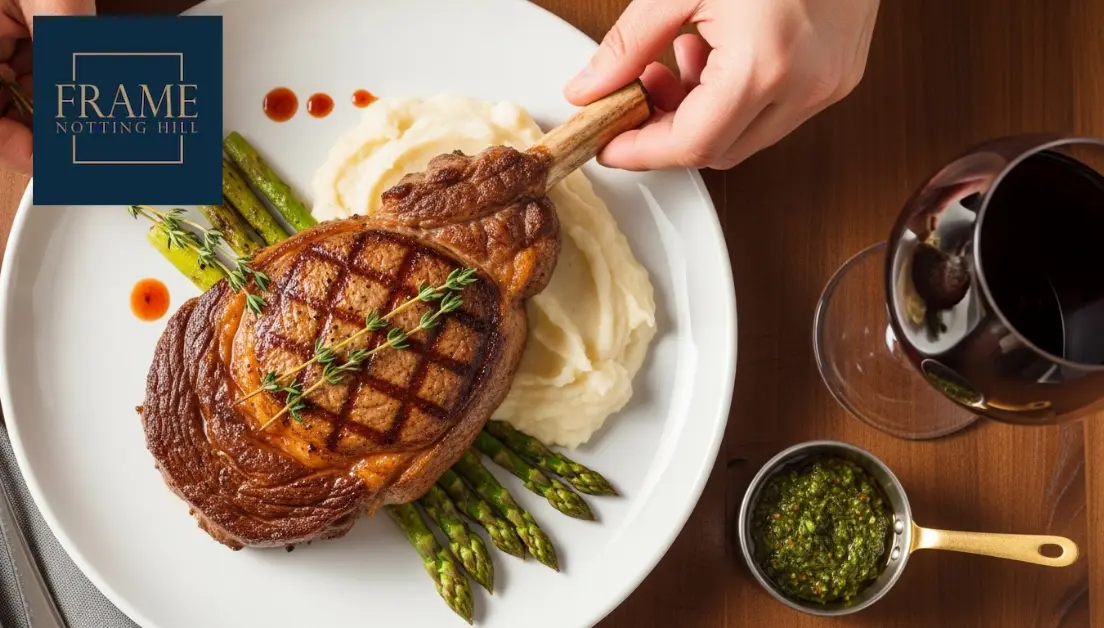
Classic pairings: Triple-cooked chips, creamy mashed potato, roasted bone marrow, wilted greens with garlic, asparagus with hollandaise, or a simple dressed watercress salad.
Sauces: Béarnaise, peppercorn sauce, chimichurri sauce, or a simple red wine reduction all work beautifully alongside ribeye.
Wine: A full-bodied red is the natural companion. Look for a Rioja Reserva, Argentine Malbec, or a classic Bordeaux. The tannins in the wine cut through the fat of the ribeye and bring the flavours into balance.
If you enjoy premium cuts, our menu also features Pluma Ibérica, another exceptional Iberian meat dish worth exploring
Taste Ribeye at Frame Notting Hill
At our restaurant in London, our 28-day dry-aged ribeye is a highlight of our tapas menu, paired with bold flavours and quality produce. Experience the perfect inspiration for cooking ribeye steak, paired with sharing dishes and curated wines.
Visit us at 39 Hereford Rd, London W2 4AB, United Kingdom, Tuesday to Sunday. Book your table today.